

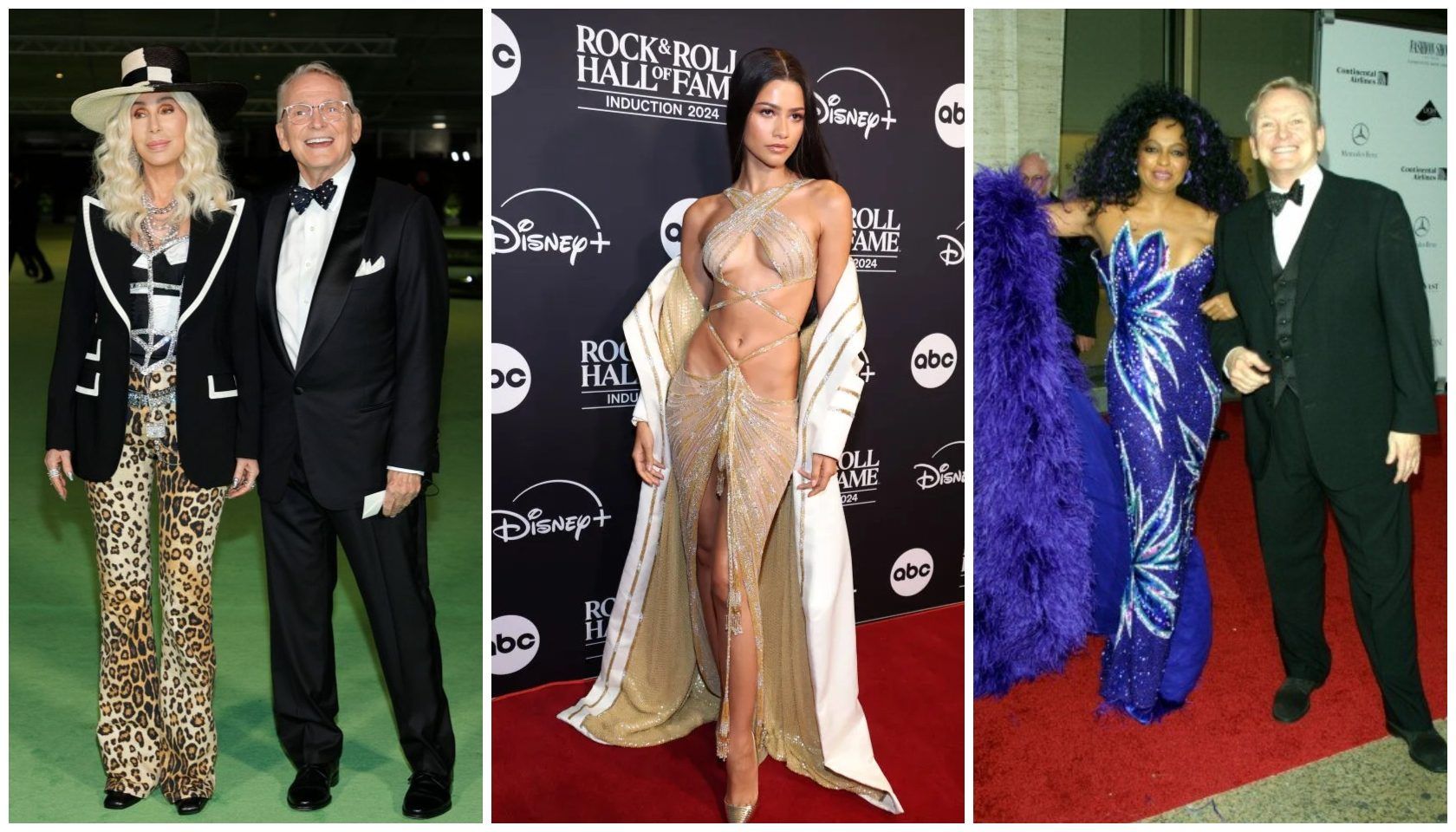
Bob Mackie transitioned, but these iconic looks on women will live on. Check out 20 of Bob Mackie’s notable designs inside.
The fashion world lost legendary fashion designer Bob Mackie on Sept. 14, 2026. The costume architect transitioned, but these iconic looks on Black women will live on. Check out 20 of Bob Mackie’s notable designs inside.
Bob Mackie — the designer known as the Sultan of Sequins and Hollywood’s most beloved costume architect — passed away from pneumonia at 87 years old in Palm Springs, California.
As his team shared on his Instagram page, “He lived his 87 years to the fullest, fulfilling his dream of being a Fashion and Costume Designer, which is all he ever wanted to do. His genius and extraordinary designs will live on forever, continuing to bring beauty into this world.”
The tributes came swiftly and from every corner of the industry. But the one that stopped us cold came from celebrity stylist Law Roach, who shared an Instagram post that reminded the world exactly where so much of Mackie’s most iconic work lived.
It lived on Black women. It lived in the sequins that caught the light when Tina Turner moved across a stage. It lived in the embellished bodysuits that Diana Ross wore on album covers. It lived in the archival gold gown that Zendaya pulled from his 2001 collection for the 2024 Rock and Roll Hall of Fame Induction Ceremony and wore like it was made for her body specifically. Because in a very real sense, all of it was.
As Essence beautifully documented in their tribute, the likes of Whitney Houston, Diana Ross, Zendaya, Tina Turner, Beyoncé, RuPaul, Iman, Diahann Carroll and the Supremes all experienced the transformative power of Mackie’s work over five decades.
And as People confirmed in their coverage of Mackie’s passing, his collaborations with Black women were not secondary to his legacy. They were the foundation of it.
What made Mackie’s relationship with Black women so significant was the specificity and intimacy of his vision. He did not design one-size-fits-all glamour. He designed for bodies in motion, for voices that filled arenas, for presences that demanded a garment that could keep up. When Tina Turner wore his flame dress on stage, the costume was not decoration. It was an extension of the performance itself. When Diana Ross wore his designs across decades of album covers and television specials, she was not just wearing clothes. She wore a declaration of what a Black woman in full command of her power was allowed to look like. And Bob Mackie made sure that declaration was as loud, as brilliant and as impossible to ignore as she deserved.
Mackie began his career as a costume sketch artist in 1961 and went on to earn 30 Emmy nominations, win nine of them, get inducted into the Television Academy Hall of Fame and receive a lifetime achievement award from the Council of Fashion Designers of America. He made over 17,000 designs for The Carol Burnett Show alone. He redefined what a halter dress could be, with Mackie himself noting that nobody was allowed to even design a halter dress until Cher started wearing them on Sonny and Cher, and then all of a sudden they were in everybody’s collection. But while Cher became his most publicly celebrated collaborator, it was his work with Black women that produced some of the most visually powerful images in the history of American entertainment. Every stylist working today, including Law Roach himself, has studied what Mackie built and borrowed from it, whether they named it or not.
Scroll through the gallery below for twenty of his most iconic designs, because this is the legacy that deserves to be seen and remembered with full clarity.
This is where the Mackie mythology truly began to take shape. When Cher started wearing his designs on The Sonny and Cher Comedy Hour, she was wearing things television had never seen before. Bare midriffs, beaded necklines, elaborate headdresses and silhouettes that belonged in a fever dream of glamour. Their collaboration over five decades produced over 1,000 designs and changed what fashion on television was allowed to look like.
One of the most photographed red carpet moments of the 1970s, Cher arrived in a Mackie creation so otherworldly that the Academy asked her not to wear it. She wore it anyway. The beaded, belly-baring ensemble with a towering headdress announced to Hollywood that Bob Mackie’s clients followed their own rules.
When Cher walked the Oscar red carpet in Mackie’s feathered black fantasy of a gown, the image became one of the defining photographs in awards show history. She won Best Actress for Moonstruck the following year, but the 1986 look has outlasted everything in terms of cultural conversation.
The sequined gowns Mackie designed for Diana Ross and the Supremes in the mid-1960s set the visual tone for what a Black girl group on the rise was supposed to look like: completely and undeniably extraordinary. These were not costume choices. They were declarations.
One of Mackie’s most photographed looks on Ross was a fully embellished and architecturally spectacular gown that showcased both her figure and his ability to create clothing that functioned as sculpture. Ross in this era and Mackie at his peak were a perfect pairing.
Mackie understood Diahann Carroll’s particular brand of refined elegance and dressed her accordingly, with designs that matched the sophisticated authority she brought to every room she entered without ever overshadowing the woman wearing them.
The entertainer known as America’s First Lady of Las Vegas was one of Mackie’s most dazzling canvases throughout the 1970s, and the looks he created for her stage shows are among the most underappreciated chapters of his entire body of work.
The performance look Mackie created for Turner’s London concert captured exactly what it meant to design for a performer whose physicality was as much a part of the show as the music. Turner in motion in a Mackie design was one of the most compelling visual experiences in live performance history.
Turner performing the Eagles’ “Life in the Fast Lane” in Las Vegas in a Mackie design that balanced showstopping glamour with the practicality of a woman who never stopped moving. Every garment he built for her had to survive the intensity of what she gave on a stage.
No list of Bob Mackie’s most iconic work is complete without the flame dress, one of the most recognizable performance costumes in the history of live music. Turner wore it like it was made of her own skin because in every way that mattered, it was. Mackie understood her fire and built her something to match it.
Mackie dressed the Somali supermodel in a design that felt ahead of its time in both cut and concept, capturing what would become one of the defining images of early 1980s high fashion and demonstrating that his vision was never limited to the stage.
Ross wore a Mackie design to her February 1986 wedding in Romainmôtier, Switzerland, and the look balanced romantic softness with the kind of regal authority that only Mackie knew how to give her. Even on the most personal day of her life, she chose him.
View this post on Instagram
A post shared by Sandra Jones (@hotmamaangel)
Houston in a Mackie design at the absolute height of her powers. The look matched the enormity of her voice with an equally spectacular visual presence, which is the only appropriate response to dressing Whitney Houston.
Ross attended the 20th Annual CFDA American Fashion Awards with Mackie himself by her side, wearing one of his designs to an event honoring the fashion industry’s finest. A full-circle moment between a designer and his most enduring collaborator.
Mackie’s influence on Beyoncé’s performance aesthetic runs deeper than any single credited look. The theatrical, body-celebrating, light-catching vocabulary he established with Turner and Ross was directly inherited by Beyoncé’s entire visual approach to the stage.
The Euphoria actress has become one of the most interesting young women in fashion and her reach into the Mackie archive produced a moment that connected old Hollywood maximalism with the current generation of style risk-takers in a way that felt completely natural.
The South African pop star and Grammy winner brought Mackie’s design sensibility into the contemporary conversation, wearing an archival look that demonstrated how timeless his constructions truly are when placed on a woman who understands exactly what to do with them.
Zendaya began pulling from the Mackie archives years before most of the fashion world caught up to what she and Law Roach were building together, and this early archival moment was one of the first signals that she was going to treat fashion as a form of historical dialogue.
The vintage 2001 Bob Mackie gold gown that Law Roach pulled for Zendaya’s appearance at the Rock and Roll Hall of Fame Induction Ceremony became one of the most discussed fashion moments of the year and one of the most powerful arguments for the enduring relevance of Mackie’s work. Law Roach’s Instagram post honoring Mackie after his passing centered this look as evidence of a designer whose influence on the current generation of Black style icons is as direct and as powerful as anything he created fifty years ago.
The gowns Mackie created for the Supremes across their countless television appearances throughout the 1960s shaped the visual identity of one of the most iconic groups in music history and established a template that fashion is still returning to. Every time you see a fully beaded gown on a Black woman on a stage or a red carpet, you are seeing the direct legacy of what Bob Mackie built in those early years with those three women from Detroit.
Rest well, Bob Mackie. The sequins, the silhouettes and the women who wore them will never let the world forget what you gave us.
RELATED: Zoë Saldaña’s Most Iconic Looks
Bob Mackie’s Most Iconic Looks On Women: 20 Designs That Made History was originally published on hellobeautiful.com
Rest In Power: Notable Black Folks Who We’ve Lost In 2026
Ladies, Meet the Hottest NFL Players of 2026
2Pac Was 90s Fine: 30 Years Later, We Remember His Best Looks
The 30 Most Beautiful Black Women In Hollywood 
We care about your data. See our privacy policy.
An Urban One Brand
Copyright © 2026 Interactive One, LLC. All Rights Reserved.