

[ad_1]
In the Neighborhood of Make-Believe, Daniel Striped Tiger is the old man on the block.
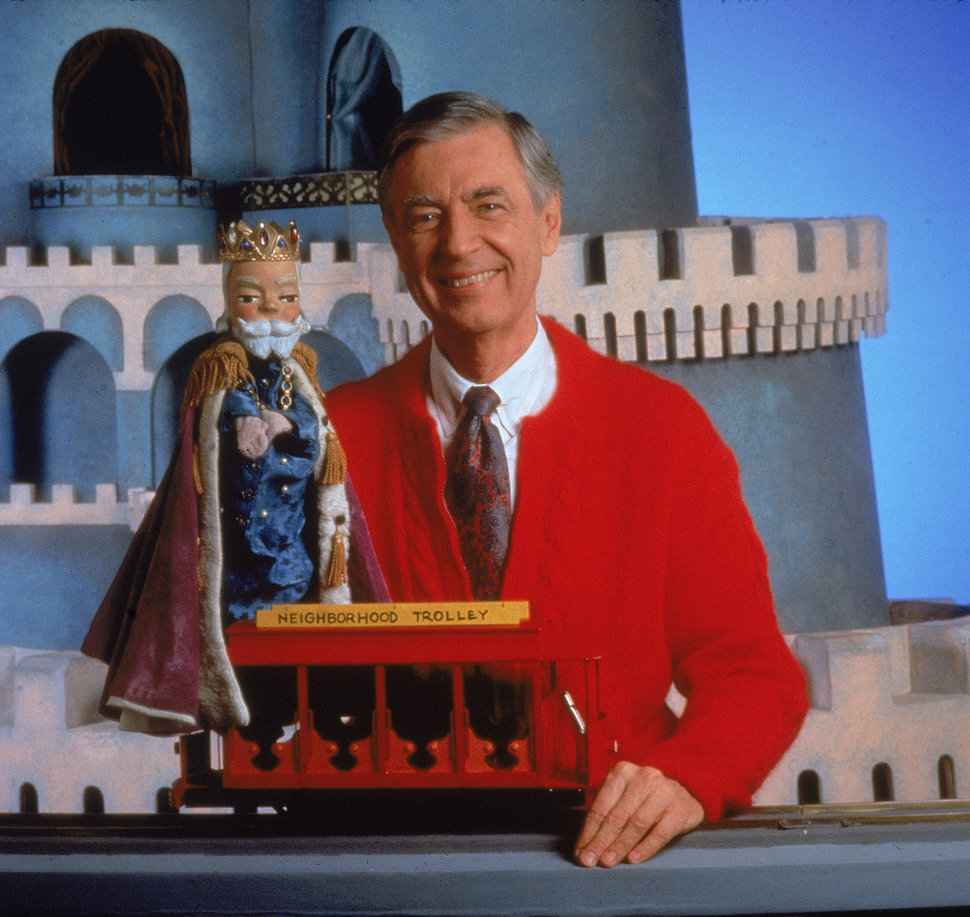
He emerged, Venus-like, from a clock drawn on the wall in 1954 to become the first puppet on Fred Rogers’ famous PBS show. Eventually, the shy and slightly lumpy creature got some neighbors, who shared names and quirks with people from Rogers’ life. There’s curmudgeonly Lady Elaine Fairchilde (based on Rogers’ sister), matronly Harriet Elizabeth Cow (Rogers’ aunt) and sensible and sweet Queen Sara Saturday (Rogers’ wife, Sara Joanne).
“He did all the voices,” Joanne Rogers (who goes by her middle name) explained in Morgan Neville’s new documentary “Won’t You Be My Neighbor?” ― a tear-jerking retrospective on the minister-turned-TV icon’s life and work.
But only one of the characters was a proxy for Rogers himself.
“Daniel was the real Fred,” Joanne Rogers said.
Daniel spent over 15 years on the air with Fred Rogers, letting the creator channel a cautious wonder that might have otherwise felt insincere coming from an adult. He was genial and inquisitive as he would preach on topics like friendship and individuality, singing to Lady Aberlin (Betty Aberlin) about being a “mistake” or poignantly asking her to explain the meaning of assassination. Kids were enamored. Shy Daniel amassed an Elmo-like following before he and Rogers retired in 2001.
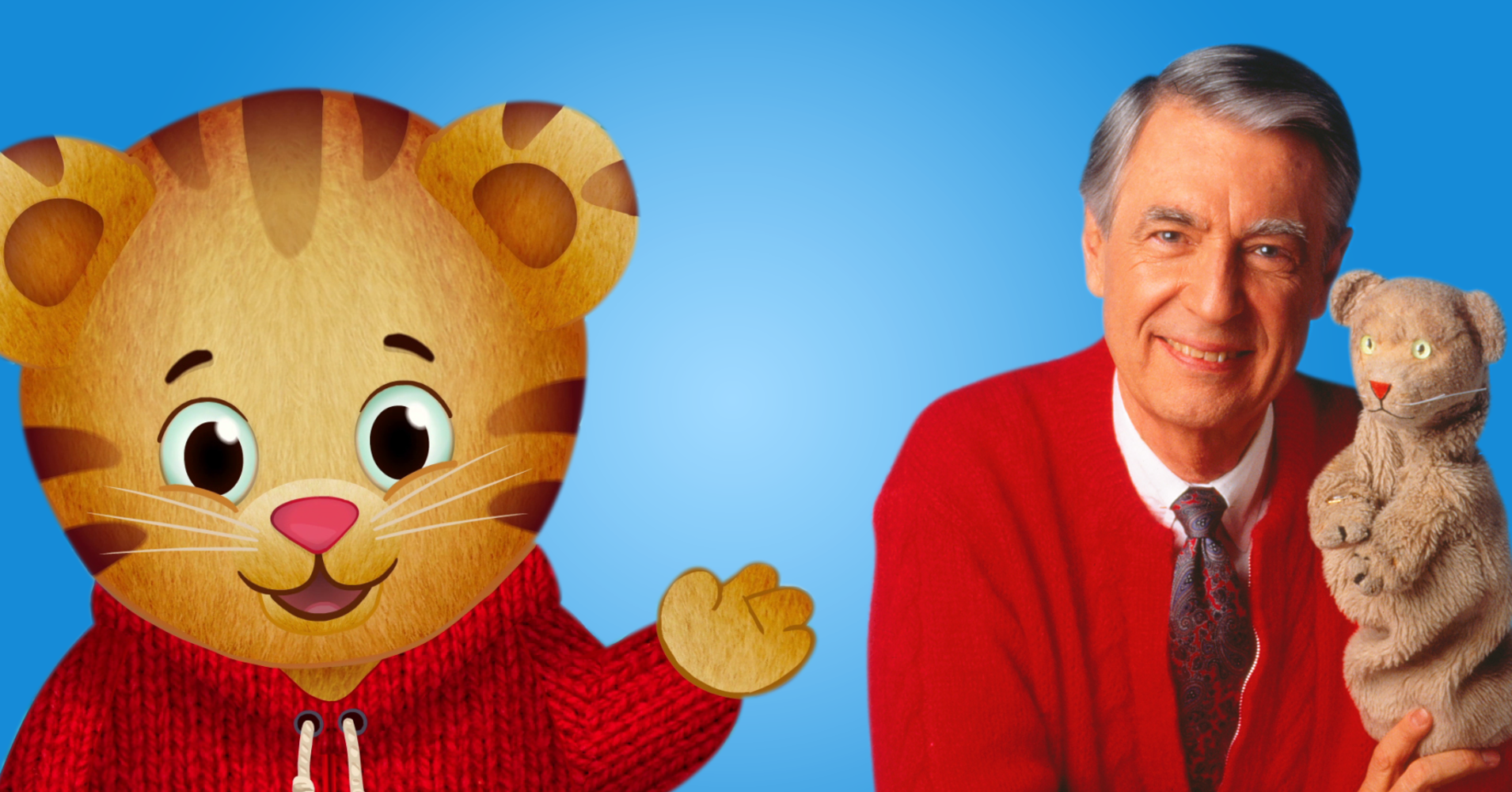
Flash forward to 2018, and another tiger named Daniel ― less lumpy, similarly docile ― lives on kids’ screens. At the start of his 25-minute animated episodes, this Daniel zips up a red sweater he could have swiped from Rogers’ own closet, puts on his sneakers and speedily sings “It’s a Beautiful Day in the Neighborhood” before hopping on the neighborhood trolley. Everything about his routine is pleasantly familiar, down to the curious but hesitant way he navigates the show’s big moral themes.
It all makes sense when you learn his parentage: He’s Daniel Striped Tiger’s son. In effect, he’s Fred Rogers incarnate.
Fotos International via Getty Images
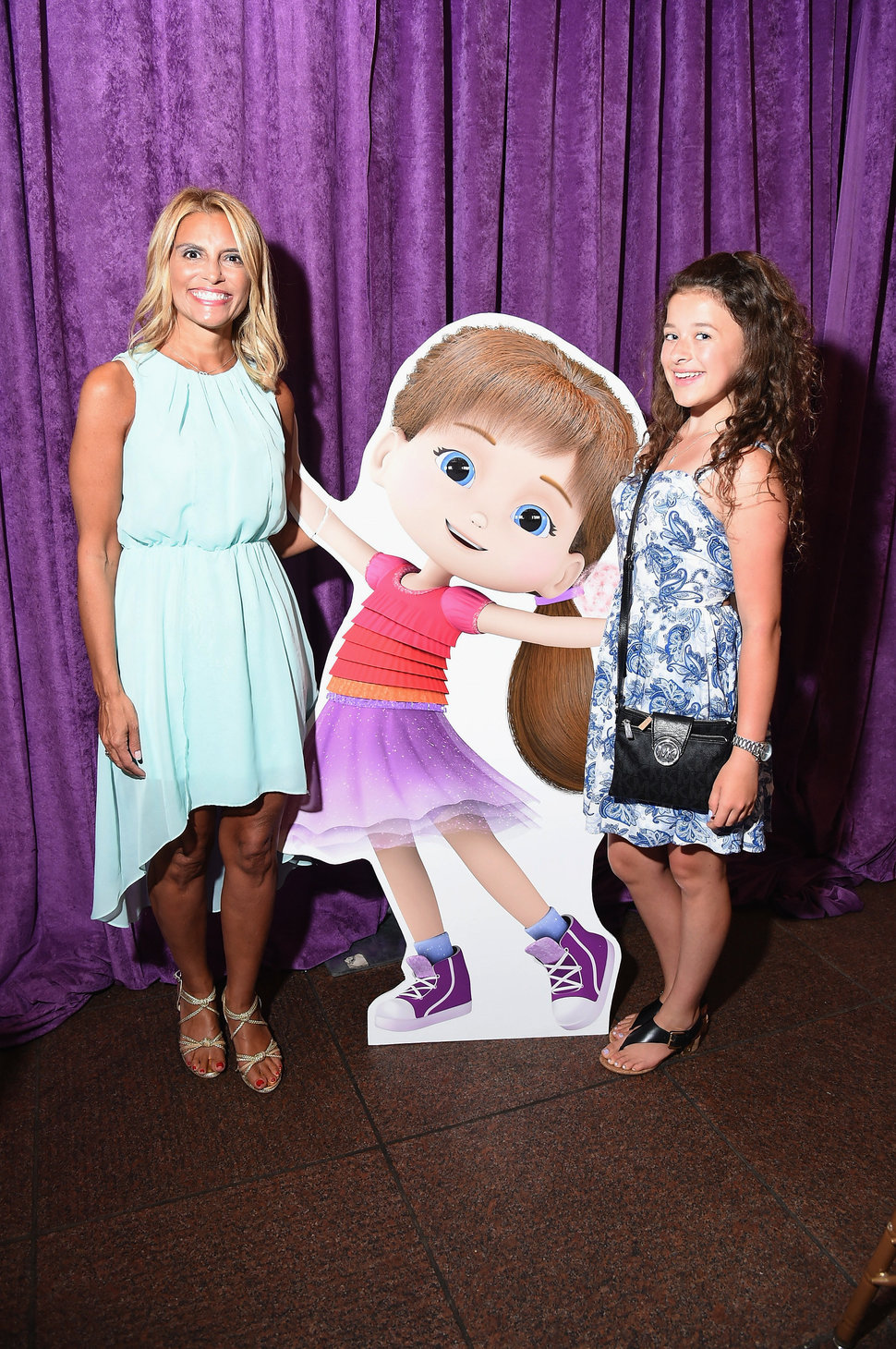
“Daniel was definitely always my favorite [‘Mister Rogers’ character],” Angela C. Santomero, the children’s television auteur behind the animated hit “Daniel Tiger’s Neighborhood,” told HuffPost during a phone conversation in May. Her show, centered around the 4-year-old CGI cub of Daniel Sr., is headed into its fourth season.
Santomero has been a fan of Rogers and his educational TV practices since she first watched “Mister Rogers’ Neighborhood” as a kid. “I couldn’t sit any closer to the TV when it was on,” she said. So when she created her first show, “Blue’s Clues,” alongside Todd Kessler and Traci Paige Johnson in 1996, the New Jersey native deliberately channeled Rogers’ essentials: adult host, strategic pauses and earworms, coupled with an understanding of early development theories. (She has a master’s degree in child development and psychology from Columbia University.)
“Every time I’d talk ‘Blue’s Clues’ … the conversation would be about Mister Rogers and his influence on me,” she said of her long-running series, which is set to make a comeback.
A year after “Blue’s Clues” debuted, Santomero found herself at a luncheon with Rogers and they got to talking about Steve (Steve Burns) and his spotted pup, who navigated an array of everyday problems together in ways familiar to the PBS veteran.
“As it happens, he thought most children’s television programs were missing the mark, but he did like my show, and recognized and appreciated its child development foundation,” Santomero writes in her book Preschool Clues: Raising Smart, Inspired, and Engaged Kids in a Screen-Filled World.
“It was kind of one of those moments in time that I’ll just never forget,” the mother of two humbly told me, in her distinct New Yorker-esque accent. “We really had this strong bond over child development and what we wanted to say to kids.”
Rogers died in 2003 of stomach cancer at the age of 74. But his company pushed on, hoping to continue his legacy of incorporating early childhood development theories into digestible, marketable TV that excited the very fans who watched it ― kids. In looking for someone to pick up the mantle, the powers that be thought of Santomero.
“His team reached out and said, ‘You know what? He actually didn’t like very much of what was on television, but he liked your work. Would you think about what you would do that would promote his legacy?’” she said.
Michael Loccisano via Getty Images
Santomero did not want to, nor could she, find a replacement for Rogers ― on or off screen.
“Fred’s not somebody we can go out and hire or find, and we didn’t want to animate him. But the idea of taking Daniel Tiger, who was his first puppet and the character that it’s been said is most like him, and making that character the star of the show, worked,” she said.
And so Daniel’s son became her lead. The series, which debuted in September 2012, follows the cub and a new generation of preschoolers living in the Neighborhood of Make-Believe. Of course, the pleasant spirit of Rogers is noticeable immediately.
“I love seeing the little hints of ‘Mister Rogers’ within ‘Daniel Tiger’s Neighborhood,‘” said 18-year-old Addison Holley, who’s voiced Miss Elaina, the daughter of Lady Elaine Fairchilde and Music Man Stan, since the pilot episode of Santomero’s show. “Daniel ends every episode by saying ‘ugga mugga’ with the little nose [rub], and when you watch ‘Mister Rogers,’ you see that Daniel the puppet also did that,” she added.
Parents ― many of whom actually grew up on “Mister Rogers” ― love seeing the subtle throwbacks, too. Countless online comments on parental message boards praise “Daniel Tiger’s Neighborhood” and the Rogers-approved social strategies it teaches children.
“It’s beautiful, nostalgic, familiar and engaging,” one mother writes.
“The adults in the cartoon use great verbiage to communicate with children, and parents and teachers can LEARN from this ourselves!!!” another notes. “This show is VERY developmentally appropriate, and easy for parents to watch WITH their kids.”
Giving parents something to chew on was a big part of Santomero’s game plan. “It was important to us that the adults in the [show’s] world were modeling the strategies that Fred Rogers would model,” she said. “For this show, even though Mom and Dad and Teacher Harriet probably will make mistakes, we show them very much in control and learning by doing. They are a little bit more like models that parents can use and look to.”
(For the record, not every parent finds “Daniel Tiger” to be an enthralling work of TV. As Deadspin writer Stassa Edwards wrote in 2016, “If all of the stereotypes found in a New York Times style section piece on wealthy, overprotective Brooklyn parents became an animated television show, it would be ‘Daniel Tiger’s Neighborhood.’”)
But the show is primarily geared toward kids ― ages 2-4, to be exact.
“Daniel is one of those beloved, favorite characters,” Santomero proudly said. “We go in [to research groups] and kids just want to hear another Daniel story.”
(Even Edwards admitted her child knows how to control his tantrums because of a lesson the series’ wide-eyed cat taught him. Plus, she doesn’t have to keep up with Elmo anymore.)
Courtesy of The Fred Rogers Company
Santomero hoped to bring some real scholastic competition to the “Sesame Street”-filled children’s TV landscape after “Blue’s Clues” ended after a decade, and working with Fred Rogers Productions seemed a surefire way to do it. The company “provided the 40 years of socio-emotional curriculum that Fred had fine-tuned across that time, as well as all of his music.”
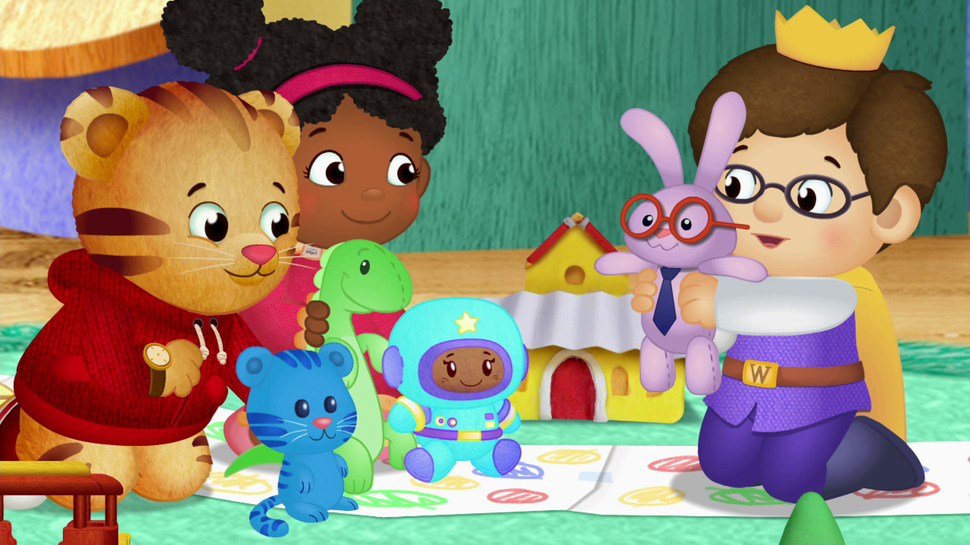
“We really dug deep in the issues that Fred wanted to talk about ― the emotions and enabling feelings,” Santomero explained. A typical installment looks like Episode 316, in which Daniel is in charge of the neighborhood for a day after King Friday, Make-Believe’s ruling sovereign, hands off his tasks. By the end of the 25 minutes, Daniel is upset. He didn’t finish everything on the king’s to-do list. But in classic Rogers fashion, a sweeping moral wipes away his tears: His kindness toward neighbors, he learns, made him fit for the job, regardless of his accomplishments.
“Something always happens to Daniel or one of his friends in an episode, whether they’re upset over something or a sort of feeling that they’re not OK with. Then, they learn how to overcome that feeling,” Holley explained. “And there’s always a special little song that kind of puts it together. There’s a potty song about going to the bathroom, and I know a family that watches ‘Daniel Tiger’ and they would sing the song and that’s how they would know what to do in the bathroom.”
Earworms aren’t as simple to create as you might think. According to Santomero, music for her show goes through rounds of fine-tuning with the executive team ― story producers, writers, editors, head of research ― before making its way into the final scripts.
“We sit down with the Fred Rogers Company and identify themes. Then, we talk about the ‘Fred-ish’ way to approach those themes,” Santomero explained. “We start to formalize a strategy and create and write a story around that strategy.”
From there, the New York-based team tests an episode’s songs on children in local schools and day care centers. “They’re very honest and unfiltered!” Santomero said with a laugh. “We watch them, observe them, see what questions they ask about the show and whether or not they can repeat back the mission of the series or the episode or song.”
If the feedback is positive, the episode’s lyrics are sent to the show’s music company, Voodoo Highway, which composes the sticky tunes.
“It’s not just that we want them to know whatever we’re teaching in the moment, we want it to have created a connection for kids so that they’ve mastered the concept,” Santomero said, driving home her persistent desire to get through to her fans, not just entertain them. “So when Daniel’s going through something that they feel they’ve gone through before, like trying a new food, when they put themselves in that same situation it will obviously trigger that memory of a simple song that will help them get through something.”
As a somewhat frustrated mom, Joelle Wisler, wrote in a blog for HuffPost in 2015, “They are the ear worms that I can never get out of my head. They follow me everywhere. And people really do look at me strange when I start singing to my child in the grocery store, ‘Germs, Germs Go Away’ as I wipe the cart down.”
It’s not just that we want them to know whatever we’re teaching in the moment, we want it to have created a connection for kids so that they’ve mastered the concept.
Angela Santomero
If song creation sounds like a long process, just look at the timelines for the show. Santomero admits that each episode takes about nine months to create. Her team concocts about 20 episodes a year, simultaneously working on multiple scripts in different stages of development: pre-production (script drafting, research trials, meetings), production (script finalizing, casting calls, song creation) and post-production (animation, sound, voice-overs).
“I say it’s like having a baby,” she joked, before turning serious again. “My personal mission is to empower, challenge and build the self-esteem of preschoolers while making them laugh. As an older kid, I really started to understand that Fred was using media to teach. I just grabbed onto that idea: That’s how we can use TV to bring everything together.”
Santomero, whom Joanne Rogers considers “a modern-day Fred,” is hyperaware of media’s influence on the upbringing of children. And she is adamant that kids should only experience storylines that specifically relate to their day-to-day lives; they don’t need to learn how to be, say, a Power Ranger.
“We only want to answer the questions that kids ask,” she said, “like being left at school for the first time, or going to the doctor and getting a shot.”
That’s not to say she shies away from tackling tougher subjects, like death, natural disasters or fear. In Episode 320, Daniel sees that his pet fish isn’t swimming or moving at the bottom of his tank. Dad Tiger (i.e., the animated version of the original Daniel) comes in to explain the concept of death to his young son, as Mom Tiger encourages him to ask questions and talk about why he is sad.
But Santomero prefers not to show a character taunting or bullying someone on screen. She’d rather give kids a positive spin on topics that plague adults before kids can even understand them. “Things like that will help to add to their reservoir of knowledge so that it could prevent bullying without showing bullying,” she said.
“We still believe that preschoolers shouldn’t be around the news, but what they are hearing are adult stressors,” she added. “We know they’re asking those questions so it makes sense for us to bring them those kinds of stories. The problem with [addressing] those fears is we don’t want to put it into their minds.”
Today, Santomero shares some of Rogers’ cynicism about children’s programming and its inability to prioritize education over entertainment, but she remains impressed with the creators in her field who fight the prevailing impulse.
“There are producers and network executives who have very strong visions and they really want to put the best out there for kids,” she explained. “To me, it’s probably one of the best times to be a creator. Everybody really cares about what they do, and it’s not that they didn’t care before, it’s just that there were so few shows that made it.”
Even 18-year-old Holley, who came of age long after Rogers dominated PBS, feels a sea change.
“‘Daniel Tiger’ covers a lot of stuff that other kids series haven’t covered in the past,” she concluded. “I think that’s changing. People are starting to be more realistic and they’re not so afraid to show kids what life is actually like.”
[ad_2]
Source link