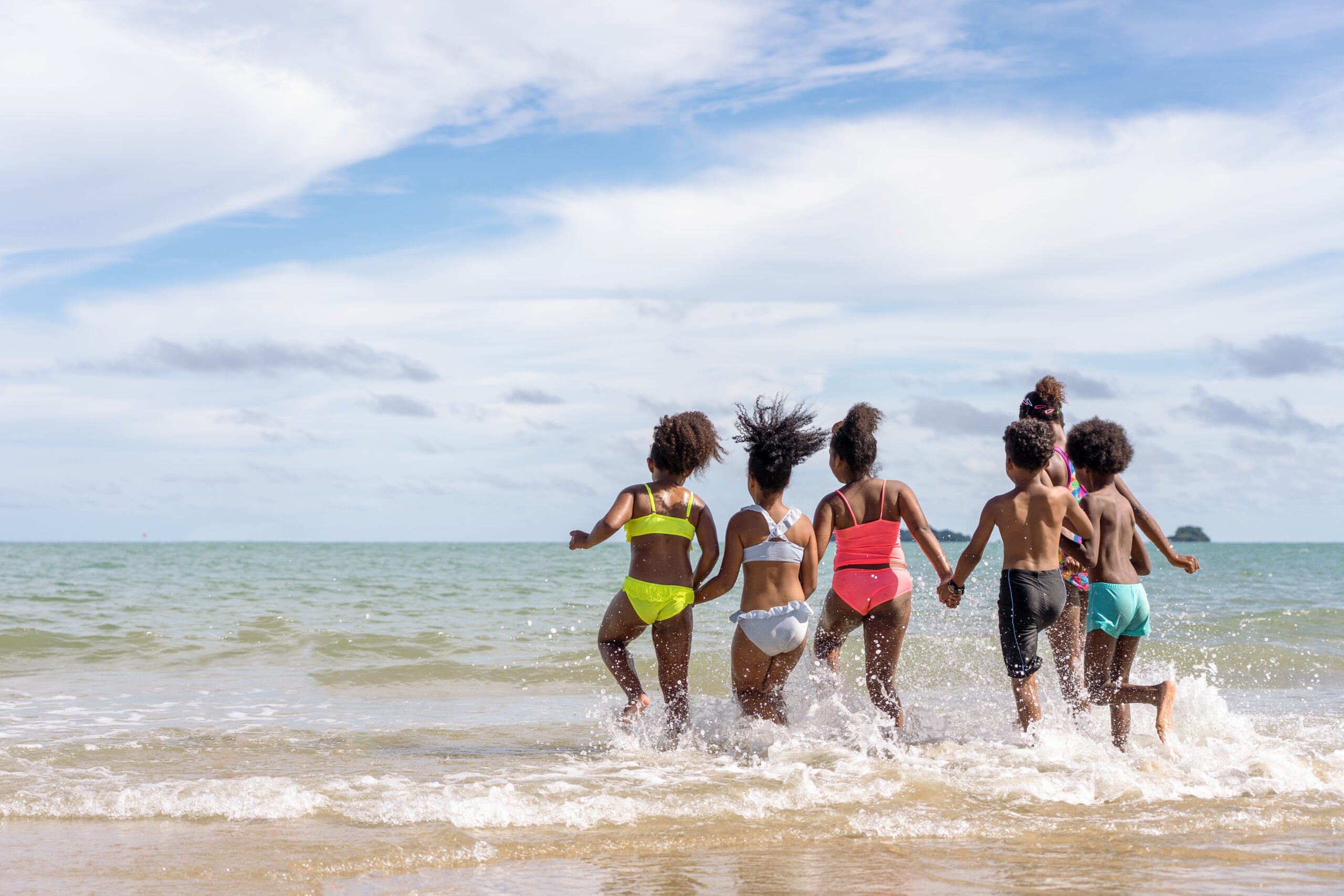
Data shows Black children drown at significantly higher rates than their white peers, a disparity tied to access, history, and opportunity.
As temperatures rise and pools fill up across the country, a quiet crisis resurfaces every summer: Black children continue to drown at significantly higher rates than their white peers, a disparity rooted not in myth but in a long, documented history of exclusion.
This month alone,5-year old twin sisters died after being found unresponsive in a pool at a Florida vacation rental, with investigators still examining whether the pool’s safety fencing was properly secured. Days later, search crews are still combing the Potomac River near Great Falls for Nazir Bell, a 20-year-old Towson University student who disappeared while swimming with friends and is presumed to have drowned, after he reportedly called out for help before going under.
Drowning is the leading cause of death for children ages 1 to 4 in this country, killing about 4,000 people a year, according to the CDC. But that risk isn’t shared equally. Black people under 30 drown at 1.5 times the rate of white people, and for kids, the gap gets worse. Black children ages 5-9 drown at 2.6 times the rate of white children. For ages 10-14, it’s 3.6 times. And in swimming pools specifically, Black children ages 10-14 drown at a staggering 7.6 times the rate of their white peers.
“The numbers don’t lie,” Paulana Lamonier, founder of Black People Will Swim, told CBS News. “Black and Brown people are more likely to drown than their white counterparts.”
A 2021 study conducted at YMCAs by the USA Swimming Foundation and the University of Memphis found that 64 percent of Black children don’t know how to swim, compared to 40 percent of white children. And that gap doesn’t stay contained to one generation. The same research found that if a parent can’t swim, their child only has a 13 percent chance of learning. Whether it’s rooted fear or simply a lack of access, the avoidance of swimming and water can be inherited, thus increasing the risk of drowning and continuing this dangerous cycle.
Now, Black people’s apprehension about swimming transcends vain concerns about messing up their hair (though those are very real concerns). Historian Jeff Wiltse, who wrote “Contested Waters: A Social History of Swimming Pools in America,” traced how cities across the northern U.S. built public pools in poor white immigrant neighborhoods in the late 1800s and early 1900s, while deliberately skipping Black neighborhoods. When pools eventually appeared for Black communities, they were often smaller and indoor. And when Black swimmers tried to use the nicer pools built for white residents, they were frequently met with police or outright violence. This is part of the reason why the “Black people don’t swim” stereotype calcified into something that still costs lives.
And the stakes are rising, literally. Black neighborhoods already see more major flooding than non-Black neighborhoods, and that disparity is expected to roughly double by 2050. Swimming is not only a summer activity but also a survival skill, especially as the federal government withdraws resources meant to track this problem. Earlier this year, the Trump administration gutted the CDC’s Injury Prevention Center, eliminating the teams that focused specifically on drowning prevention nationwide.
So, regardless of whether or not you’re a parent, let this be a reminder to invest in learning how to swim because you could be the one to save someone’s baby from being a statistic. Similarly, experts recommend that parents begin implementing swim lessons as early as a child’s first birthday. Organizations, including Outdoor Afro, Alma Swim, and Black Kids Swim, all offer resources to help.
In addition to learning how to swim, remember that young children should never be left alone near bathtubs, pools, spas, or open water, even for a minute, and a swimming-capable adult should stay within arm’s reach of any infant, toddler, or weak swimmer. Coast-guard-approved life jackets are non-negotiable for kids near water, non-swimmers, and anyone on a boat, and adults should be wearing them too, not just handing them out. On a policy level, fencing requirements, life jacket laws, lifeguard standards, and clearly marked safe swimming areas are all proven to reduce drowning deaths. And if you’re a caregiver, or even a teenager watching younger siblings this summer, learning CPR is worth the afternoon it takes.
Ultimately, the notion that “Black people don’t swim” was never really about ability. It was about access, and access is something we can still fight for.
More About:Lifestyle
Weekly New Episodes
Stream Now