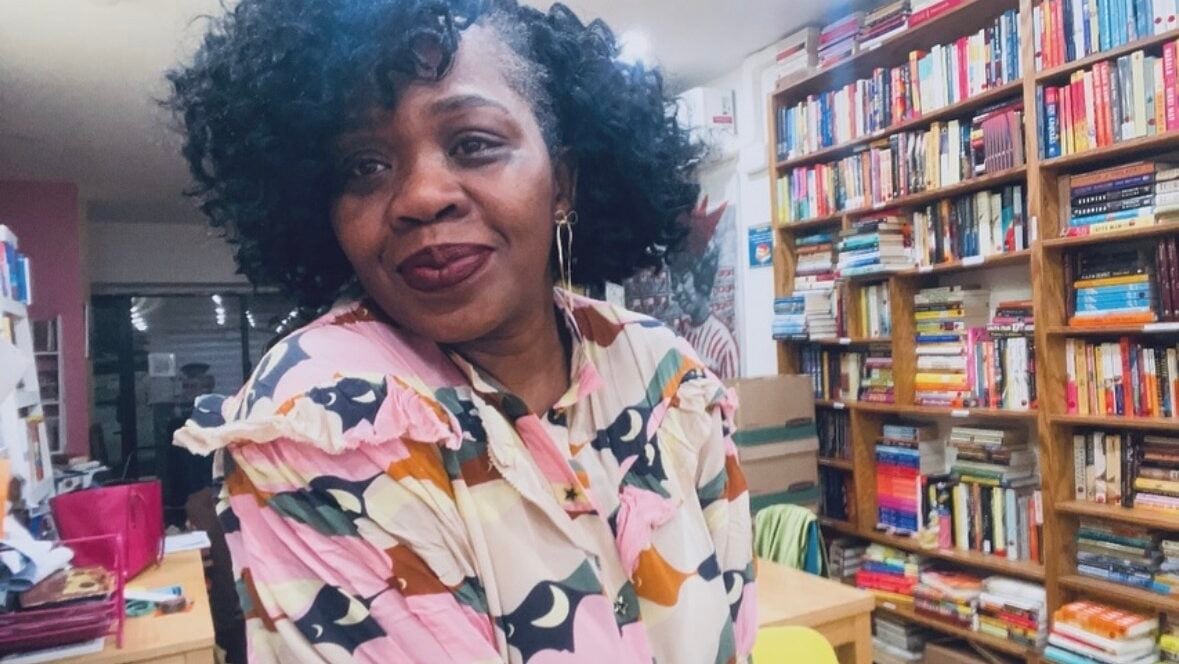
Inside the Free Black Women’s Library and what it takes to sustain it in an era when it couldn’t be more integral.
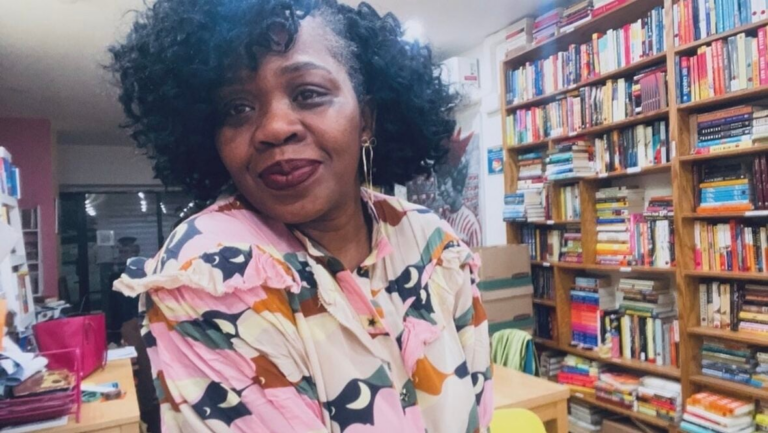
On any given day in Brooklyn, the sounds emanating from a local library could be that of strummed banjos, peals of laughter during a comedy show, singles using books as wingmen, applause during lively book talks, lifelong friends meeting again for the first time, or the discovery of the life and legacy of some of literature’s most integral voices. Such is life at the Free Black Women’s Library, where OlaRonke Akinmowo, a Brooklyn-born interdisciplinary artist and set dresser, has spent over a decade stewarding the literary works of some of literature’s most influential Black women writers.
Eleven years after establishing the library with just 100 books, Akinmowo, who spoke with theGrio on Tuesday, Nov. 24, is entering a new chapter with the launch of the library’s first fellowship, with plans to digitize its collection, and dreams of moving into a larger space.
“Hopefully what’s next is more growth, more expansion,” she gushed.
At a time when there is growing urgency around preserving Black literature, history, and culture, the Brooklyn native is aware of how integral her mission is. Born out of a desire to celebrate Black womanhood rather than just lament the circumstances under which so many Black women exist, the Free Black Women’s Library has, in a sense, become a living embodiment of many of the Black radical feminist texts on its shelves through its expansive mutual aid and community focus.
“If I had known how important this project would become, I think I would have been intimidated by starting it,” she admitted.
A post shared by Rebeka @ NYC for FREE (@nyc_forfree)
The Free Black Women’s Library came to the artist in 2015 as she was theorizing about how to continue doing something meaningful to impact Black women while navigating what felt like burnout after years of more conventional organizing. It started as a mobile library, and has since grown to a storefront in Bedford-Stuyvesant that houses a collection of more than 5,000 books by Black women and nonbinary writers. Instead of a traditional library card and check-out system, the Free Black Women’s Library runs on a trade setup where visitors leave a title in order to take a title that they can either bring back for another trade or are free to keep.
The community can also partake in everything from adult literacy classes and herbalism workshops using herbs grown in the library’s own backyard to picking up gently used clothing from its free store or even stocking up on menstrual supplies from its period pantry.
When the founder was getting the library off the ground in the latter half of the 2010s, Black literature was enjoying something of a renaissance. Black women were dominating bestseller lists as Black stories were increasingly making their way to the big and small screens, and diversity, at least on the surface, was something many of the country’s leading cultural institutions were striving toward. A decade later, amid a widespread backpedal on diversity, equity, inclusion initiatives, book bans, and debates on how history can be taught in schools, the Free Black Women’s Library couldn’t be more necessary.
“I’m glad I didn’t realize it at the time,” she continued, adding, “Because it is so critical right now for us to preserve, protect, and actively defend these books and these stories and Black women’s stories.”
What comes to mind for the literary enthusiast is the extremely apt, famous Kurt Vonnegut quote, “The death of a library, any library, suggests that the community has lost its soul.”
A divestment in Black literature, she said, “robs us of our own possibility and our own potential. It’s so important for us to see and feel and read about worlds outside of ourselves and beyond ourselves, especially written by Black women.”
She continued, “There is so much possibility and imagination and encouragement and motivation that’s found within our books and within our stories.”
A post shared by OlaRonke (@thefreeblackwomenslibrary)
Sustaining the library over the years has required a combination of what Akinmowo described as “blood, sweat, and tears,” the generosity of others, and getting creative about generating revenue. She now sells merch with the library’s logo and other designs, including tote bags and apparel bearing the likenesses of some of her favorite Black women. There’s also been crowdfunding efforts and Patreon, and she spends a portion of virtually every week applying for grants.
Among those who have shown the library some love recently is Drew Barrymore, who in 2022 had her as a guest on her daytime talk show and gifted the artist laptops. Today, those laptops are being used by community members to apply for jobs and Medicaid, among other things, with two social workers on hand. Breakthroughs like that are part of what keeps her going.
Even though it’s become a labor of love at times, what sustains the librarian is how much life the Free Black Women’s Library has managed to cultivate under its roof. She’s welcomed back folks celebrating a friendiversary after having met there and witnessed writers discover their voices in community workshops. She’s seen the start of an artist’s journey, or someone discovering there are writers already out there on the same wavelength.
Now, the founder, who suspects the library may have outgrown its current digs, is giving more thought to how it might outlive her. The newly launched Dottie Fellowship, which will usher in the library’s first paid position, pays homage to Dorothy Porter Wesley, the pioneering Howard University librarian whose work collecting and preserving Black history continues to serve generations of scholars.
She’s also exploring an expansion of the library’s digital reach, hopefully to a global audience through an app, which is a prospect that has the bibliophile excited, especially for someone who still gets a kick out of putting people onto books by Black women they might otherwise never have encountered. Despite the cultural backlash and the increasingly urgent nature of her work, that aspect of running the library hasn’t lost any of its novelty.
“Witnessing people’s awe and fascination and excitement when they see the wide range of work that has been put out into the world, written by Black women,” she said. “That’s really exciting to me.”
More About:Books
Weekly New Episodes
Stream Now