

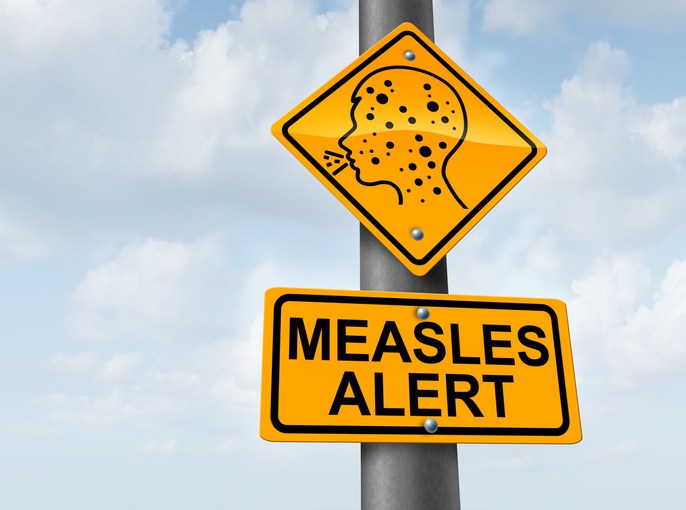
Gov. Kathy Hochul declared a state disaster emergency Oct. 5 as measles cases rise across New York, particularly in rural communities. Here’s what we know.
On Oct. 5, Governor Kathy Hochul issued an Executive Order declaring a State Disaster Emergency as New York continues to see an increase in measles cases, particularly in rural communities across the state and neighboring areas. The growing outbreak has raised concerns among health officials as the number of confirmed cases continues to climb.
Here’s what we know.
According to the New York State Department of Health’s recent announcement, as of Oct. 3, there have been seven confirmed measles cases in New York City and 101 cases in New York State, bringing the statewide total to 108 cases this year. The increase comes amid a broader rise in measles cases both in the United States and globally.
Since July 15, 92 cases have been reported among under-immunized rural communities across 18 counties. In response, local health departments have administered more than 1,000 doses of the measles, mumps and rubella (MMR) vaccine in rural areas of New York State. They have also launched the Measles Dashboard, a tool that will help residents and officials keep track of cases as they rise.
The outbreak has been bubbling up since 2024, beginning with 15 individual cases. In 2025, five were reported, according to Governor Hochul’s 2025 press conference.
According to a press release, the Executive Order allows the state to respond more quickly to the outbreak and gives healthcare professionals additional tools to help more New Yorkers get vaccinated and tested when necessary.
Hochul urged New Yorkers to get this year’s flu vaccine to help protect against infection. The Governor said she remains committed to protecting the health and safety of New Yorkers and has directed the New York State Department of Health to provide frequent public updates and resources throughout the flu season.
“After reviewing the latest data on measles cases in New York State, I am declaring a State Disaster Emergency to strengthen our ongoing efforts to confront this disease,” Governor Hochul said. “No one should get seriously ill or die from a vaccine-preventable disease. That is why I have taken steps to increase the number of health professionals who can vaccinate and test. These emergency measures will protect New Yorkers and support our community partners as they work tirelessly to address the spread of this disease.”
New York State Department of Health Commissioner Dr. James McDonald added:
“I appreciate Governor Hochul’s swift action to help address ongoing measles cases. Department staff is working closely with local health departments and regional partners to track and contain the current measles outbreak. The measles, mumps, and rubella vaccine is the best protection — protecting nearly all people against disease who receive the recommended doses. I urge New Yorkers to check their vaccination status and make sure that they and their families are protected. I also ask health providers to be prepared to diagnose and treat any measles cases they encounter.”
The Executive Order also expands the pool of eligible healthcare professionals who can administer measles vaccines. The expanded group includes paramedics, advanced EMS providers, pharmacists and midwives. In addition, nurses can now order measles testing, alongside physicians.
Read more about the New York Measles outbreak on the next page.
Measles is a highly contagious and serious respiratory disease that can cause fever and a characteristic rash. In some cases, the infection can weaken the immune system’s ability to fight other illnesses, including pneumonia.
The disease is caused by a virus that spreads through the air when an infected person coughs or sneezes. People can become infected by breathing in the virus or, less commonly, by touching a contaminated surface and then touching their eyes, nose or mouth.
According to the Centers for Disease Control and Prevention (CDC), measles symptoms typically begin seven to 14 days after exposure. The illness often starts with cold-like symptoms before progressing to the characteristic rash.
Common symptoms include:
Measles can lead to serious complications, including hospitalization, pneumonia, miscarriage, preterm birth, brain swelling, immune amnesia and death.
Long-term complications can also occur. One of the most serious is subacute sclerosing panencephalitis (SSPE), a rare form of progressive brain inflammation that can develop years after an initial measles infection and may result in permanent brain damage.
State Senator Gustavo Rivera said Monday he believes rising cases are “due to a decrease in childhood vaccines driven by misinformation and are causing a public health emergency.”
Notably, the national measles vaccination rate has fallen below the roughly 95% coverage level considered necessary to maintain community protection, with about 92.5% of U.S. kindergartners vaccinated, according to 2025 data obtained by Johns Hopkins. At the time, state-level MMR vaccination rates varied widely, ranging from 78.5% in Idaho to 98.2% in Connecticut, with just 10 states reporting coverage above 95%, the outlet noted.
The best protection against measles is the measles, mumps and rubella (MMR) vaccine.
People planning to travel domestically or internationally should make sure they are fully vaccinated against measles at least two weeks before departure. One dose of the MMR vaccine provides about 93% protection, while two doses provide about 97% protection.
Babies as young as 6 months old may receive one dose of the MMR vaccine if they are traveling internationally or to an area where measles is prevalent. After travel, these infants should continue to receive their next two MMR doses according to the recommended schedule, for a total of three doses.
Anyone who is not protected against measles can become infected while traveling and may easily spread the virus to others after returning home. Staying up to date on MMR vaccination remains the most effective way to protect yourself, your family and your community.
Notably, New York’s growing measles outbreak comes just one year after South Carolina was hit with multiple cases of the disease in 2025.
RELATED CONTENT: Everything We Know About The Measles Outbreak In South Carolina
Everything We Know About The New York Measles Outbreak was originally published on newsone.com
COMMENTARY: 5 Reasons Why Obama Will Beat Romney
The 30 Most Beautiful Black Women In Hollywood
Rest In Power: Notable Black Folks Who We’ve Lost In 2026
Ladies, Meet the Hottest NFL Players of 2026 
We care about your data. See our privacy policy.
An Urban One Brand
Copyright © 2026 Interactive One, LLC. All Rights Reserved.