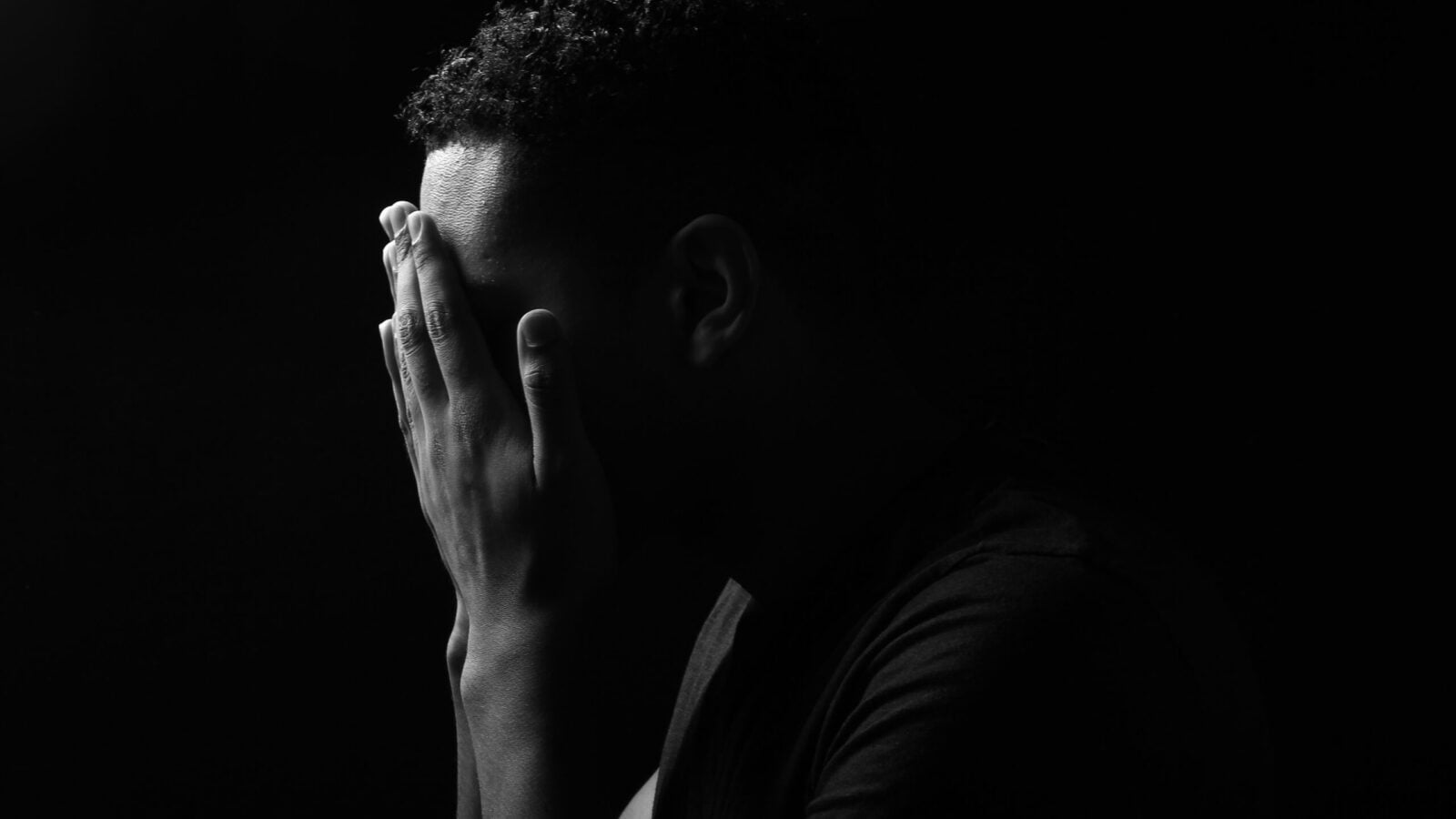
T-Kea Blackman, co-founder of Black People Die By Suicide Too, gets real about the rising rates of suicides among the Black community.
When someone like T-Kea Blackman hears the message, “Black people don’t hang themselves,” she understands the sentiment behind it.
She knows why mysterious Black deaths, particularly those ruled suicides with little to no investigation, can raise questions in a community with a long and horrific history of underreported lynching. She, of course, believes those deaths deserve attention and warrant deeper investigations.
However, for the co-founder of the Maryland-based suicide prevention organization Black People Die By Suicide Too—who is an attempt survivor herself and has lost a relative to the crisis—the phrase lands a little differently.
“I understand both sides of it,” Blackman told theGrio by phone in September during Suicide Prevention Month.
“I don’t want to negate what we are experiencing as a people, and we have experienced for decades,” she continued. “But at the same time, leaving room because what we end up doing is causing unintentional harm to people who are struggling with suicidal thoughts.”
In the wake of the death of 18-year-old Nolan Wells in July and with cases like Tasia Fortune’s, in which her death, originally ruled a suicide, has been reclassified as a homicide that was staged, there’s been a resurgence of the phrase.
The blunt phrase is meant to shine a much-needed light on the horrific history of mysterious Black deaths that are underinvestigated and quickly classified as suicides when they are actually murders. However, alongside it has emerged a small, modest pushback from mental health and suicide prevention advocates like Blackman who fear the message could silence another reality.
For the advocate, it’s about acknowledging that we do “know that Black people do hang themselves,” she said, while “also leaving space to acknowledge the historical and cultural trauma that Black people have faced.”
Otherwise, the growing fear among advocates is that the urgent messaging could unintentionally reinforce a mistruth that Black people don’t die by suicide at a time when rates are rising at a concerning speed among Black Americans, particularly Black youth.
“I like to give the perspective that they do need attention. We shouldn’t avoid it because every Black life certainly matters. And if there’s something that we think needs to be investigated more, then we need to do that as a community,” she said. “On the opposite end of that, we also have to look at how Black people currently have the fastest-growing rate of suicide.”
From 2014 to 2024, the suicide death rate among Black Americans increased 53%, from 5.7 deaths per 100,000 people to 8.7, according to recent data from the Centers for Disease Control and Prevention. Over the same decade, the rate rose 5% among white Americans and 27% among Hispanic Americans. In 2024, the suicide rate among Black boys and young men ages 16 to 29 exceeded that of their white peers. Among Black men ages 20 to 24, it reached 31.9 deaths per 100,000.
Meanwhile, research published by the National Institute of Mental Health found that Black children ages 5 to 12 are dying by suicide at nearly twice the rate of their white peers.
Driving those numbers isn’t any one factor. For one, there are systemic barriers to quality and culturally competent care making it harder for Black people struggling with their mental health to seek help or even admit they need it, according to the National Alliance on Mental Health. From experimentation and exploitation to segregation, forced sterilization, and documented disparities in treatment that persist today, Black people have also been harmed by institutions for generations.
“Black people have a history of being abused, taken advantage of in the medical system,” Blackman reminded. “So rightfully so, we don’t want to go to a place that’s supposed to protect us, but ends up harming us.”
Within Black culture, there is also a deeply rooted stigma around mental health, particularly around admitting that you are struggling. Generations of Black people have had to survive extraordinary circumstances, and strength has become a mixture of a source of pride and a requirement. Blackman brought up the “strong Black woman” trope and the slim emotional space often afforded to Black men.
“Black women, we’re not given the freedom to have a range of emotions,” she said. “We have to be strong, meaning we can’t show if we’re upset, because then we’re going to be deemed difficult.”
Meanwhile, racism and discrimination, financial instability, grief, violence, dangerous environments, the political climate, the slashing of diversity, equity, and inclusion, and ICE breathing down many people’s necks are still occurring with very little room or space for Black people struggling to simply say so.
“Black people are ready to talk about suicide,” Blackman explained.
“They just haven’t had a space to do so,” she continued, adding, “A lot of Black mental health professionals are getting into the space because they also understand Black people do need safe spaces, and for many of us, we do only feel comfortable seeing someone who is Black.”
It’s also a big part of why she co-founded Black People Die By Suicide Too three years ago. The advocate said that while there were already Black mental health organizations doing important work, she and her co-founder didn’t see anyone centering suicide specifically.
“For us, we’re like, we have to say the word so that way we can just at least start addressing it,” she expressed. “Like, ‘suicide’ for Black community is a dirty word.”
Since it launched, the organization has offered free virtual support groups and, last year, started a wellness retreat for Black people who have lost loved ones to suicide. Blackman said people have repeatedly told them they needed something that spoke directly to their experiences.
“Black people are just saying ‘there hasn’t been anything like this before, and I need this,’” she recalled.
Part of their mission is also education on suicide prevention, including knowing what to look for in others. Suicidal ideation doesn’t always mean someone has made a plan or explicitly says something to imply they intend to die.
Blackman said warning signs can look like someone giving away prized possessions, withdrawing after the death of a loved one, the end of a relationship, or another major life event, or expressing a desire to go to sleep and simply not wake up. It can be really passive, like someone with asthma not reaching for the inhaler during an attack, or feeling that if an accident or illness claimed their life, they wouldn’t mind.
She also views suicide prevention as much bigger than mental health treatment after someone has already reached a crisis. In her view, prevention includes paying Black people livable wages, ensuring they live in safe neighborhoods, providing access to quality education and culturally competent care, and rebuilding the community support that Black people have historically relied on.
“Suicide prevention is also making sure that we are in community and have a support system,” she said. “Black people have always survived and thrived with being in community. We can’t heal in isolation.”
The language used around suicide can carry stigma of its own. Blackman advises against saying “committed suicide,” which can place blame and associate a death with committing a crime or sin, and instead uses “died by suicide.” She also prefers “experiencing suicidal thoughts” to saying someone as “suicidal,” and “attempt survivor” rather than describing an attempt as “failed” or “unsuccessful.”
“Words and messaging matter because they shape how we feel, how we view the world, how we view ourselves,” she said.
That concern over messaging brings Blackman back to “Black people don’t hang themselves.” She doesn’t want Black people to stop questioning suspicious deaths or forget the history that makes those deaths especially alarming. She also doesn’t want the language used to demand answers about those deaths to tell someone struggling with suicide that what they are experiencing simply doesn’t happen to Black people.
“It’s nuanced,” she admitted.
“But I think when we have ‘absolute’ statements or facts that we deem as facts, and we have the messaging of ‘Black people don’t hang themselves,’ then it implies Black people just don’t hang themselves in general,” she conintued. “Which means we don’t die by suicide.”
She added, “And we know that Black people, in fact, do hang themselves.”
Her larger goal is to make talking about suicide less loaded in the first place, so Black people can name what they are experiencing without the shame that has kept so many of these struggles happening in silence.
She said, “My goal is to just change the way that we communicate about suicide, so that way we can work to remove stigma, shame, and foster more courageous conversations.”
If you or someone you know is struggling with thoughts of suicide, help is available. You can call or text 988 or chat at 988lifeline.org to reach the Suicide & Crisis Lifeline. These services are free, confidential, and available 24/7. For culturally comprehensive non-emergency help you can reach out to the Black People Die By Suicide Too, Therapy for Black Girls, or Black Men Heal.
More About:Lifestyle
Weekly New Episodes
Stream Now