Here's a look back at the phones that mattered most, in roughly the order they showed up and shaped the industry.
The cell phone didn’t start as a fashion statement or a status symbol, it started as a fifty-pound problem strapped to a car trunk.
Since Motorola pulled off the first handheld mobile call in 1973, phones have gone through wild transformations: from clunky bricks only the wealthy could afford, to flip phones that defined a decade, to the touchscreen slabs now permanently attached to our hands.
Along the way, a handful of devices didn’t just sell in huge numbers, they changed how people expected a phone to work, look, and feel.
Some introduced features we now take for granted, like texting or app stores. Others became cultural icons simply by being the phone everyone wanted to be seen with.
Here’s a look back at the phones that mattered most, in roughly the order they showed up and shaped the industry.
RELATED | The Soundtrack of the Morning: Tony Katz 90s
The one that started it all. The DynaTAC was the first commercially available handheld cell phone, weighing nearly two pounds and costing about $4,000. Ten hours to charge for thirty minutes of talk time — but it proved mobile calling could work outside a car.
One of the first truly compact, mass-market mobile phones. It helped establish Nokia as a serious player and made carrying a phone in a jacket pocket feel realistic for the first time.
The flip phone that launched a thousand imitators. Sleek, small, and futuristic for its time, the StarTAC is often credited as the device that made cell phones look genuinely desirable rather than purely functional.
This is the phone many people actually remember owning. Durable, simple, and famous for popularizing Snake, the 3210 sold over 160 million units and became a defining device of the early text-messaging era.
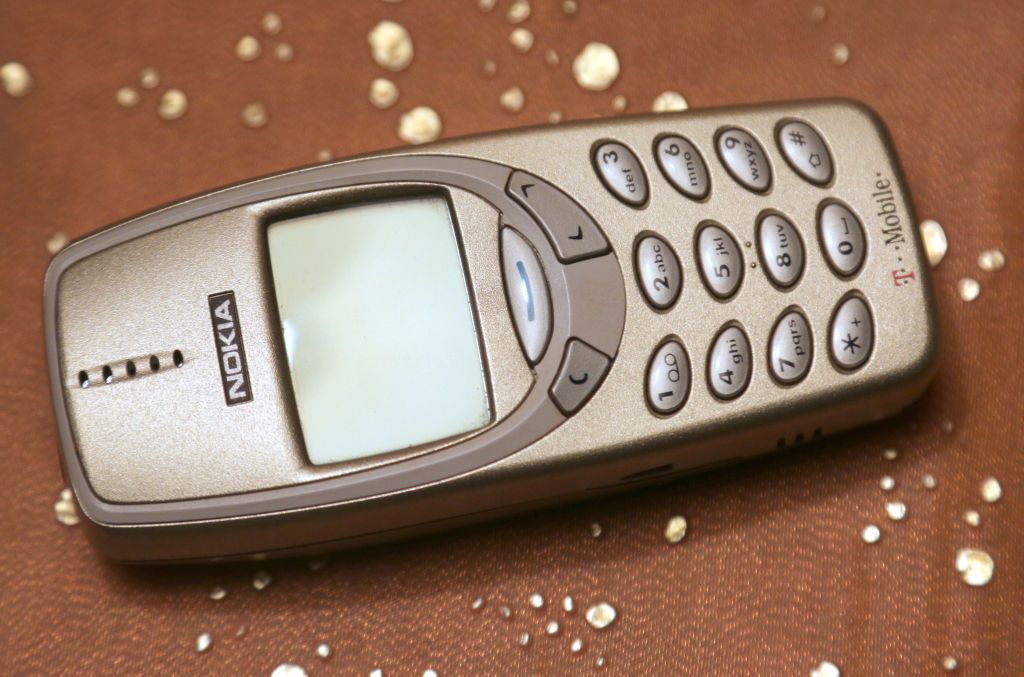
The 3310 took everything that worked about the 3210 and made it nearly indestructible. It became a meme in its own right decades later for its legendary battery life and toughness.
A design icon. Thin, metallic, and impossibly cool for its era, the Razr sold well over 130 million units and remains one of the best-selling phones in history — flip phone or otherwise.
Before smartphones went mainstream, BlackBerry owned the business world. Physical keyboards and secure email made it the must-have device for professionals — and for a while, a genuine status symbol.
Sleek, black, and touch-sensitive buttons that lit up red. It was less about specs and entirely about looking like nothing else on the market.
For a stretch, these were the coolest phones for music lovers before the iPhone made a dedicated MP3 phone unnecessary.
The very first Android phone. It wasn’t flashy, but owning one made you an early adopter in a way that felt genuinely cutting-edge.
Ultra-luxury handsets, often priced in the thousands, made from sapphire crystal and precious metals. Never mass-market, but the ultimate status symbol phone.
The device that redrew the map. No physical keyboard, a full touchscreen, and an app-driven interface changed what people expected from a phone entirely. Every smartphone since has been reacting to it in some way.
This is the model that brought the App Store, turning the iPhone from a slick device into a platform. It’s arguably the moment the modern smartphone era truly began.
Its slide-out keyboard and webOS multitasking cards were ahead of their time, and it developed a cult following even after Palm couldn’t compete with Apple and Android.
Samsung’s answer to the iPhone and the phone that established Android as a genuine competitor rather than an alternative. Bigger screens, faster processors — it set the template for the Android flagship.
Apple’s first real jump into bigger screens, released after years of resisting the trend. It became one of the best-selling iPhones ever, proving consumers wanted size along with simplicity.
From here forward, the story isn’t one device — it’s an ongoing arms race between Samsung and Apple’s flagship lines, with each iteration pushing cameras, screens, and processing power further. These annual releases now define what “popular phone” even means.
The Most Popular Cell Phones of All Time was originally published on wibc.com
Ladies, Meet the Hottest NFL Players of 2026
Rest In Power: Notable Black Folks Who We’ve Lost In 2026
The 30 Most Beautiful Black Women In Hollywood
Social Media Erupts With Hilarious Reactions To Kenya Moore’s Suspected Cosmetic Sorcery 
We care about your data. See our privacy policy.
An Urban One Brand
Copyright © 2026 Interactive One, LLC. All Rights Reserved.