

Adoption was not only my decision. It was my inheritance—the outcome of shame and trauma. Survival. Loss of connection to self and truth. Running. Avoiding vulnerability at all costs.
Clinic after clinic told me it was too late to have an abortion.
I was four months pregnant, 23 years old, living in Atlanta in the fall of 1986. When the last door closed, I did the only thing I had ever been taught to do with something that hurt. I got quiet. Silence and shame consumed my body.
Hiding my growing belly became my only goal. Day after day, I threw on oversized clothes, praying my roommates and co-workers wouldn’t notice and wouldn’t ask. I never once considered telling my mother.
My son was conceived by rape. By who? A colleague. A friend. Or so I thought. All I knew was that I could not—would not—keep the baby.
RELATED CONTENT: National Adoption Day! 14 Celebrities Who Found Family Through Love, Not Biology
I’d have to make the most difficult decision of my life. I would place my Black son up for adoption as I was determined to become a buyer for Macy’s in New York City. I delivered the news to my son’s father in a short statement: “I’m four months pregnant and have made the decision to put the child up for adoption; you have no say in this decision. I don’t need or want anything from you but your signature…” He signed the paperwork, and we never spoke again.
Silence was survival.
I was convinced nobody was going to see what had been done to me. They would only see a 23-year-old Black woman who had gotten herself pregnant, and they were going to file me exactly where they had already decided women like me belonged. I would not be their proof. I refused to represent my people and my culture in that way. So I carried my shame, my fear, and my baby alone.
. . .
I was a little “colored” girl born into poverty, raised in a predominantly white town, living in a home that didn’t celebrate Blackness. Although she had four of us, my mother made it known she never wanted children. She was married to alcohol and never loved my father. Up until she passed, she always laughed when telling the story about the time she shot him in the chest. He survived, and ever since, she called me the “kiss-and-make-up baby.”
That was me. Fourth in line.
I was five years old when I understood I was on the front lines of my life—alone in a world that couldn’t raise me. Teachers, neighbors, the town itself told me in a hundred small ways that my future had already been measured and it was short. My father left when I was nine years old, and after that I learned to survive my otherness with nobody to show me how. I always told my mom I felt like I was born into the wrong family. I was always aware and wanted to be proud of my Blackness, but the messaging at home was just the opposite, especially after my dad left.
The wound that formed was simple, and it never left. I was not enough. And never would be. Beneath the loneliness, fear, and confusion, there was always a knowing deep inside of me that God—the Universe—had a different message for me and my life’s direction.
. . .
Jan. 18, 1987. My water broke at work. My heart started racing, and I ran out of the building without telling anyone.
I called Pat at the adoption agency, who had accompanied me to all of my prenatal appointments while nobody in my own family knew I was pregnant. I rushed to my apartment to pick up the go-bag and drove myself to the hospital. Pat met me there. I checked in at the front desk and demanded that if anyone inquired about my presence as a patient, they were not to disclose my identity.
I disappeared.
After thirty-six hours of labor followed by a C-section, I gave birth to my baby boy on Jan. 20, 1987.
The nurse entered the room with the final adoption paperwork and asked, “Would you like to hold your baby?”
I quickly responded, “No.”
I lay in the cold, sterile room for hours, repeating to myself, “I got to get out of here.”
Then she asked again.
This time I said, “Yes.”
I held my innocent Black son, reveling in his beautiful chocolate skin and his head full of hair for a few minutes. Then I said goodbye, never once dreaming of what his name would be.
The hospital staff told me I had two weeks to change my mind. “I am not changing my mind,” I replied as I signed away my parental rights and never spoke of it again.
The little girl inside me still had dreams and goals to achieve.
. . .
My high school teachers told me I wasn’t college material. My guidance counselor agreed with them. I’d spent every year since planning to prove them all wrong, graduating from high school and The Ohio State University. Quaker Oats had just offered me a sales job in New Orleans, the first real door anyone had ever opened for me, so I was not going to raise a child alone at twenty-three, at the front end of the only career I had ever been offered, out of the worst thing that had ever happened to me.
I moved from Atlanta to New Orleans and started over.
I did not ask what race the adoptive family would be. It did not occur to me to ask.
Then I spent 27 years asking everything else: who and how would my son’s identity be nurtured? What have his experiences been? Where does he live? What does he look like? What does his voice sound like? What is he interested in? Is he okay?
The questions never stopped.
I didn’t grow up in a home where love, acceptance, and a sense of belonging were nurtured; I was met with neglect, abandonment, uncertainty, lack of safety, and shame. At twenty-three, I had no language for any of this. I did not know what my own body was telling me. I only knew that I loved my baby boy enough to sacrifice motherhood in order to give him a better life. I didn’t prioritize a racial preference of the adoptive family at that time. I just wanted him to have access to the best education, opportunities, and experiences that a family with financial means could provide him. I wanted him held—emotionally, physically, and spiritually—in ways nobody had ever held me.
That was the whole calculation. I could not give him what I had never been given.
. . .
“I’m a Black woman in America who has had a hard life, but trauma? Nah. I haven’t experienced trauma.”
Those were my words in my first therapy session in 2010. I was 47 years old, married, with three children.
I remained on that therapist’s couch for five years, healing and embracing all parts of me for the very first time. I continued therapy for an additional seven years as part of my self-care—loving and honoring the woman I was still becoming. Somewhere in there I became a psychotherapist myself.
Twelve years in my own therapy, 10 years and counting as a psychotherapist helping other people work through their own trauma—here is what I know now that I could not have told you at 23: Trauma blocks love. Trauma blocks connection to other people, and worse, trauma hijacks the connection to yourself.
Adoption was not only my decision. It was my inheritance—the outcome of shame and trauma. Survival. Loss of connection to self and truth. Running. Avoiding vulnerability at all costs. Reckoning with a childhood of chaos, loneliness, abandonment, and hypervigilance. Adoption was my only move as a woman in a long line of women who were never shown how to hold a child, handing down exactly what they had been handed.
. . .
After 19 years of the adoption file being closed, my son contacted me through the adoption agency. He was at Howard University at the time, and we spoke for the first time three days after his nineteenth birthday. We communicated for two weeks, but I couldn’t handle it and cut off all communication again for another eight years. Shame and silence still driving. Riddled with guilt about rejecting my son twice, only exacerbated symptoms of anxiety and depression.
Twenty-seven years after I signed those papers, I couldn’t bear it any longer, and I was willing to risk it all to choose myself and live my truth. After many years of intense therapy, the shame I had been carrying turned into acceptance and admiration toward my 23-year-old self.
It was time.
The sense of urgency erupted inside of me. I couldn’t deny it any longer; I had to connect with my son. On Nov. 5, 2014, I picked up the phone and texted my son, Erik Mohn.
The initial text read, “Hi, is this number still valid for Erik? This is Kirsten.” I pushed send and resumed scheduling parent/teacher conferences for my youngest daughter. “Surely his number had changed,” I thought. So I really didn’t think I’d get a response. A few minutes passed; my phone dinged, and then his response: “Lol, it depends who’s asking. Kirsten, as in my birth mom?”
Me: “Yes.”
The adrenaline kicked in, the rapid-fire texting began, and answers to long-awaited questions emerged. Six weeks of texting transpired before that initial phone call. This time, it all felt natural.
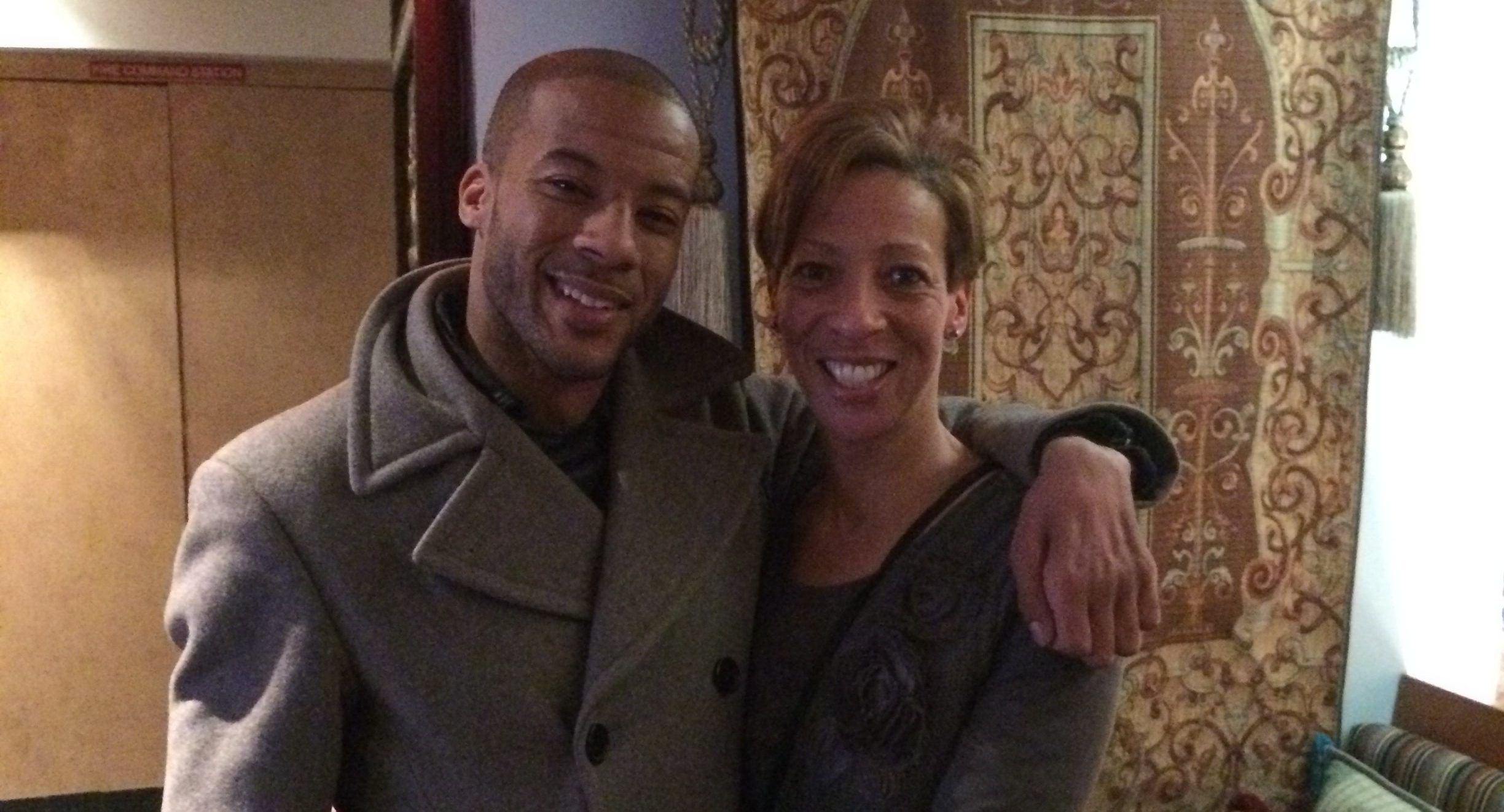
Since then, we’ve reunited. Erik has become an active member of the family and a loving older brother. His mom and I have become genuine friends, and the three of us have talked about it all. Neither one of us has any questions anymore. We even went back to the exact maternity ward he was born in on his and his adoptive mother’s (Mama Chris) birthday in 2023. (Yes, they share the same birthday!) Three people—mothers and son. Hearts connected and whole. Truly a miracle.
He is now publishing a memoir about his journey called Stranger in My Own Story.
The title hit me before I read a word of the book. I felt it in my bones. I, too, spent many years feeling like a stranger in my own story. But no more.
So here is the answer to the question. I, a Black woman, gave up my son because shame had convinced me I was the wrong person to raise him, and because nobody, not once, ever told me otherwise. Shame’s only job is to silence you. It kept me quiet for nearly my entire life.
I am not quiet anymore.
It took many years of doing the hard, deep-rooted work in therapy to arrive at this place of self-acceptance and integration. Now, at 63 years old, I hold myself at all ages, from the five-year-old to the 23-year-old, with the unconditional love and compassion I never received but deserved. Every day, I thank the little girl inside me for being so resilient, brave, and determined.
My hope for every Black woman who carries personal and legacy burdens—and we all do—is that you have the courage and curiosity to trust yourself enough to acknowledge them, release them, and embrace all parts of yourself… This is true healing toward wholeness!
There’s true freedom in “experiencing oneself in any given moment without the inhibition of self-criticism, self-evaluation, or self-judgment.”
— Dick Olney
RELATED CONTENT: Simone Biles’ Estranged Mom Hoping To ‘Make Amends’ With Olympic Legend: ‘Forgive Me’
I Placed My Black Son For Adoption After Rape — His Memoir, ‘Stranger In My Own Story,’ Helped Me Reclaim Mine [Op-Ed] was originally published on madamenoire.com
COMMENTARY: 5 Reasons Why Obama Will Beat Romney
The 30 Most Beautiful Black Women In Hollywood
Rest In Power: Notable Black Folks Who We’ve Lost In 2026
Ladies, Meet the Hottest NFL Players of 2026 
We care about your data. See our privacy policy.
An Urban One Brand
Copyright © 2026 Interactive One, LLC. All Rights Reserved.