

OPINION: As Black students continue facing racism and exclusion in predominantly white schools, one mother explains why her family is choosing Black public education instead.
Editor’s note: The following article is an op-ed, and the views expressed are the author’s own. Read more opinions on theGrio.
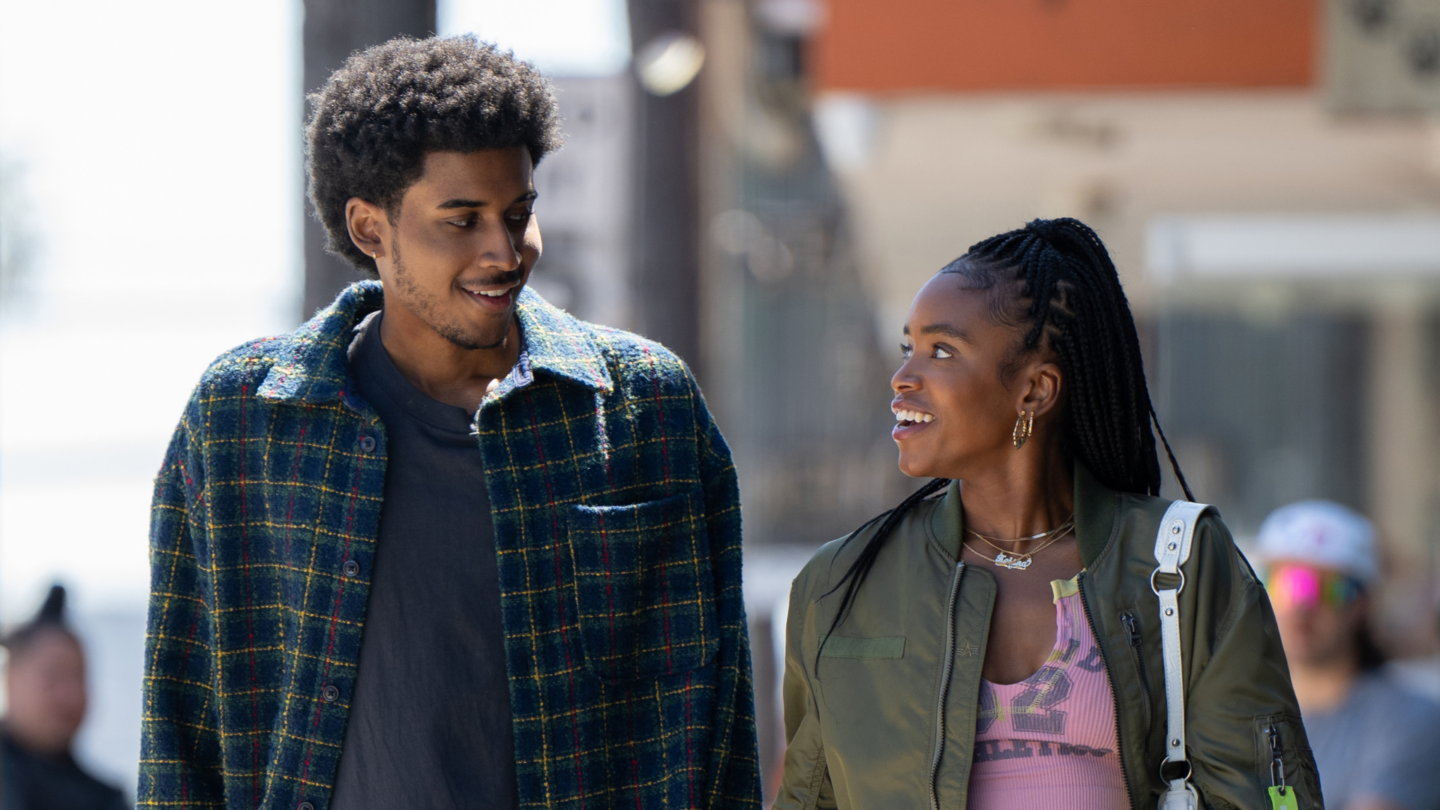
“Forever” Season 2 has started filming and the buzz, especially in my Howard University and mom group chats, is real. The first season followed seniors Keisha and Justin, and their mothers, as they navigated racial microaggressions in predominantly white schools alongside their mothers. When the mothers meet, they form a bond rooted in a shared truth: Black moms look out for each other, and their children, because predominately white institutions won’t.
Throughout the season, I was reminded schools are not neutral spaces. Children do not simply learn math and reading. Schools shape identity, safety, confidence, and self-worth.
Schools are often where children first learn racial hierarchy. We were already seen through stereotypes: angry Black girls, aggressive Black boys. That dynamic persists today, especially in predominantly white schools where Black students face higher suspension and expulsion rates. The interpersonal conflict reinforces societal standards. As hate crimes have doubled, Black children continue to bear the brunt of rising racial hostility.
Even in schools with more AP and IB offerings, Black students are less likely to access advanced courses, even though equally prepared. And regardless of course level, Black children rarely encounter affirming curriculum. When my classmates and I pushed for Black history courses, or even a broader view of American history, we were told the school lacked resources. As restrictions on teaching race expand nationwide, Black students are losing access to accurate representations of themselves and their history.
Over time, all of these stressors become what scholars call racial battle fatigue. Black students carry the mental and physical toll of constantly defending their Blackness. It appears in both their mental and physical health.
Black children deserve better. That’s why my husband and I are making a different choice.
As a middle class family, we have the economic ability to send our children to these predominately white and ,often, private schools. But we believe it is both in our daughter’s best interest and the best interest of our community to invest in Black K-12 schools, particularly public ones.
Not because we have to, but the data says we should.
In some circles, parents oppose these Black public institutions based on false perceptions of achievement. They incorrectly assert that choosing public school is self-sacrificing and to the academic detriment of their children. Decades of research show the strongest predictor of student success is parental educational background, while school testing systems often reinforce racial and economic inequality. Meaning, school test scores are not pertinent to a child’s school experience, nor do they explain the extent of learning in a building.
During my master’s program at Xavier University of Louisiana, I studied how parental income and educational diversity impacts public school improvement. Middle- and upper-class families often bring advocacy, networks, and political influence, while our absence can accelerate disinvestment. From New Orleans to Philadelphia public schools are facing mass closures—not simply because of declining birth rates, but because families are increasingly turning to alternative schooling models. These enrollment losses hit Black schools hardest.
That matters right now because public education remains one of the few institutions designed to function as an equalizer. If families with means continue opting out of public schools altogether, especially Black families with social and political capital, the consequences will not just affect individual children. Entire communities will continue to lose power, resources, and stability.
And we already understand the value of affirming Black educational spaces.
The growing popularity of Historically Black Colleges and Universities reflects that truth. Black families celebrate HBCUs because students often leave feeling culturally grounded, intellectually supported, and socially affirmed. Research even suggests students in affirming educational environments experience stronger long-term health outcomes.
But too often we wait until college to seek that affirmation, expecting HBCUs to repair nearly two decades of accumulated harm. Research shows no amount of supplemental affirmation can fully undo the impact of racism experienced between bells, day after day, year after year.
History makes this even clearer. Before Brown v. Board of Education, Black students were educated in segregated but deeply affirming environments led by Black educators who nurtured both intellect and identity. Those schools helped produce generations of professionals and laid the groundwork for the modern Black middle class.
My grandmother, the daughter of a domestic worker here in New Orleans, attended one of those schools – John McDonough High School. She was taught by educators who saw her fully and expected excellence from her. She became a first generation college graduate and continued the legacy for her family.
That kind of environment is not a luxury. It is a foundation for generational liberation.
Choosing a school for my three-year-old daughter where her Blackness is the norm—not a token, exception, or diversity statistic—is not an act of sacrifice. It’s an investment in her sense of self, her community, and her future.
As parents and caregivers enter the summer, many are making choices for their children’s educational futures. I implore you to choose affirming places for your children. Places where your presence and value are evident from the beginning.
That way, whether your child goes to Howard, like Keisha, or takes a gap year, like Justin – you’ll know they’re in the best position for their next phase in life.
Julienne Louis-Anderson is a mother and former educator who writes about the intersection of culture and politics with education and human development. She is also a Public Voices Fellow of The OpEd Project in partnership with the National Black Child Development Institute.
More About:Lifestyle Education
Weekly New Episodes
Stream Now