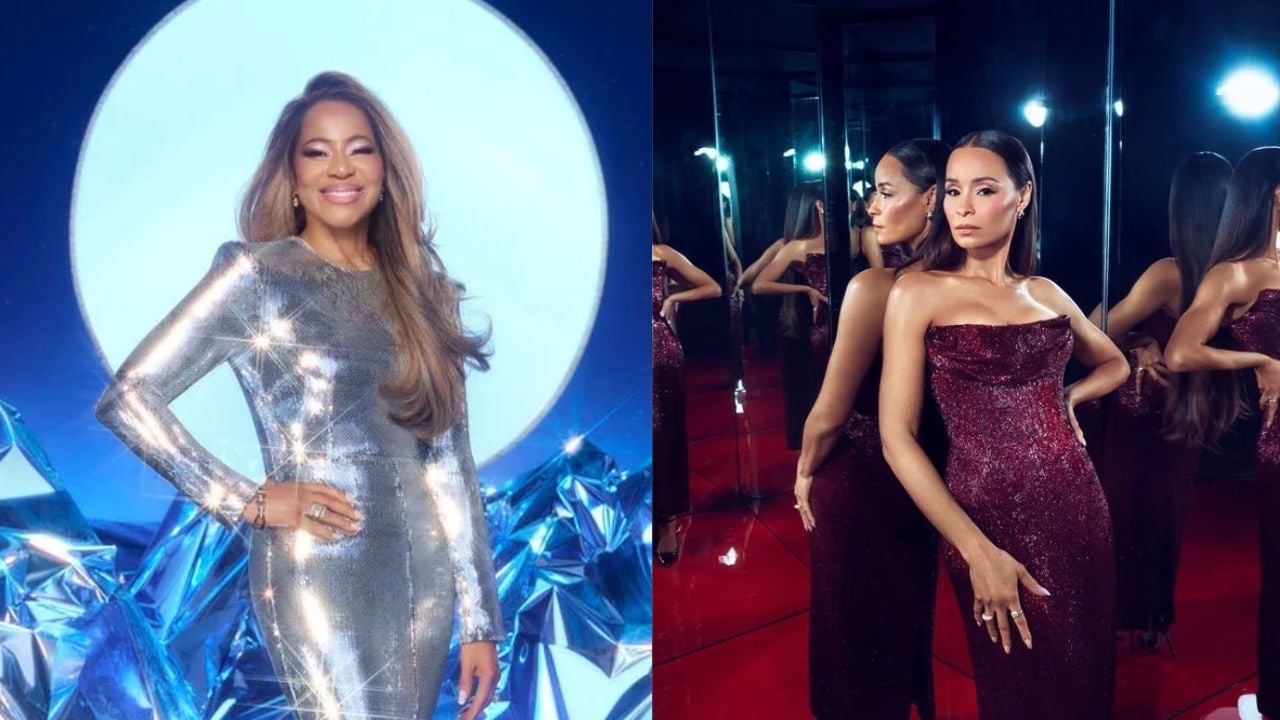
While Mary Cosby is receiving much-deserved grace, Sai De Silva is dodging microaggressions and tone policing.
A tale of two cities is unfolding across the Bravoverse.
As Mary Cosby of “The Real Housewives of Salt Lake City” is being afforded some much-deserved grace from her castmate—even amid an explosive conflict—Sai De Silva, over in the Big Apple on “The Real Housewives of New York City,” is dodging microaggressions left and right. It was the best of being friends with non-Black women; it was the worst of being friends with non-Black women. You know how it goes.
While Cosby and her longtime friend Angie Katsanevas have spent much of the current season navigating the fallout from an argument that crossed a line, Katsanevas’s approach to their fractured friendship is a somewhat refreshing display of what extending grace to a Black woman in pain can look like. Meanwhile, De Silva, who has found herself increasingly at odds with several castmates at once, including longtime friend Daisy Toye, Erin Lichy, and Carole Radziwill, is experiencing something far more familiar—having her delivery and tone scrutinized while the behavior provoking it receives considerably less attention. In a sense, these predominantly white franchises are offering very different lessons about what happens when Black women refuse to make themselves palatable for those around them.
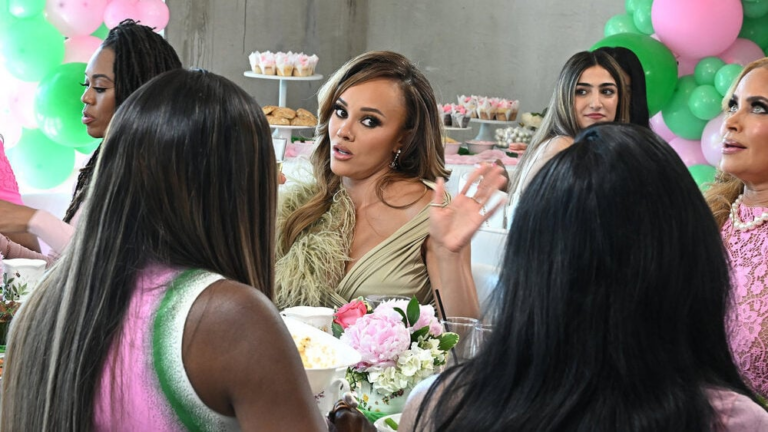
In Salt Lake City, things took a devastating turn during a reiki luncheon on the Nov. 4 episode, when Cosby confronted Katsanevas about what she felt was her friend’s recent self-centered behavior. Eventually, the conversation devolved into Cosby questioning her parenting and relationship with her teenage daughter, Elektra. Katsanevas, already struggling with problems in her marriage and slightly overwhelmed during the discourse, retaliated by repeating Cosby’s questions about her husband and child, inadvertently invoking Cosby’s son, Robert Cosby Jr., who died in February at just 23 years old.
If you know anything about Cosby, it’s that she doesn’t take even the slightest bit of disrespect when it comes to her family, so naturally she wanted absolutely nothing to do with Katsanevas at first. She blocked her number, and up until the most recent episode, she wasn’t even entertaining an apology.
But the remarkable part, however, is Katsanevas’ willingness to actually genuinely understand and acknowledge the severity of what she said without demanding that Cosby immediately forgive her, excuse her behavior, or even hear her out.
During an appearance on “Watch What Happens Live” on Nov. 4, Katsanevas admitted that she had allowed frustrations within their friendship to build without addressing them, and that although she had reached her breaking point, her reaction was inexcusable.
Across the country, De Silva hasn’t been so lucky. Already navigating a painful separation from her husband, David Craig, the Afro-Latina Housewife has spent much of the current season defending herself against accusations that she is either abrasive or confrontational, and difficult to get along with, even as several women leveling those criticisms have contributed to the conflicts themselves.
Her friendship with Toye, which spans roughly two decades, has all but completely deteriorated amid disagreements over De Silva’s directness and expectations surrounding their friendship. At one point, she yelled across the pool to the other women that De Silva was supposed to protect her from them. Oh? Meanwhile, her relationship with Lichy unraveled amid questions about who disclosed information concerning her separation, while her attempts to question Radziwill about her name appearing in documents related to Jeffrey Epstein have fueled a bizarre beef between them.
Radziwill even wrote about their strained relationship on Substack, giving De Silva another reason to confront a castmate who seemed to have plenty to say about her. And now, while De Silva certainly hasn’t handled every confrontation with the utmost elegance, it’s difficult to ignore how often the conversation returns to how she says something rather than actually addressing what she is actually saying.
During a recent appearance on Marjon Carlos’ “Your Favorite Auntie” podcast, De Silva addressed what she sees as a double standard in how she and fellow castmate Jessel Taank are treated compared with their white counterparts. She also revealed how she feels like her identity as a Black Puerto Rican woman is constantly overlooked.
Of course, none of this is especially new territory for the Housewives universe.
Garcelle Beauvais, who departed “The Real Housewives of Beverly Hills” in 2025 after five seasons, comes to mind. The Housewife alum repeatedly dealt with things like the way her castmates characterized her behavior, including a disagreement with Dorit Kemsley over language Beauvais felt reinforced stereotypes about angry Black women. By her final reunion, following another explosive confrontation with Kemsley, the actress had reached her limit. She walked off the set and refused to return for the cast photo.
One also can’t help but think of Eboni K. Williams, who in 2021 became the first Black full-time Housewife on the original “Real Housewives of New York City.” Her attempts to discuss race were frequently met with discomfort and defensiveness, and she eventually filed an internal complaint alleging racially insensitive behavior by fellow castmate Ramona Singer; however, an investigation did not substantiate the allegations.
Even De Silva’s former castmate Ubah Hassan experienced a version of this dynamic; her emotional reactions were a recurring source of criticism during her time on the rebooted franchise.
These experiences, while all very different from one another, still reveal a familiar pattern: when Black women enter spaces where everyone is encouraged to be outspoken, opinionated, and unapologetically themselves, they discover that the rules governing those qualities aren’t always applied equally.
That’s what makes the situation between Cosby and Katsanevas so compelling to watch unfold. To be clear, Katsanevas crossed a line, and Cosby wasn’t entirely blameless in the exchange preceding it. Both things can be true. But the thing that stands out about their conflict is the willingness to acknowledge that both women can be hurt without insisting that one person’s pain cancels out the other’s. There is room, in other words, for both women to be complicated human beings.
Being friends across racial and cultural lines requires bending, or even breaking, the rules in order to understand where someone else is coming from. It means recognizing that grief, upbringing, cultural expectations, and lived experiences dramatically influence how people respond when they feel hurt.
That understanding should go both ways. Too often, however, Black women are the ones expected to make the adjustments. Now, the solution isn’t to suggest that Black women have no place in predominantly white friend groups, franchises, or otherwise, nor is it to argue that they deserve an endless pass to offend others or communicate poorly. Accountability is welcomed. However, accountability without empathy can so easily become just another form of policing, especially when the person being held accountable isn’t being afforded the same understanding and grace she is expected to show.
More About:Television
Weekly New Episodes
Stream Now