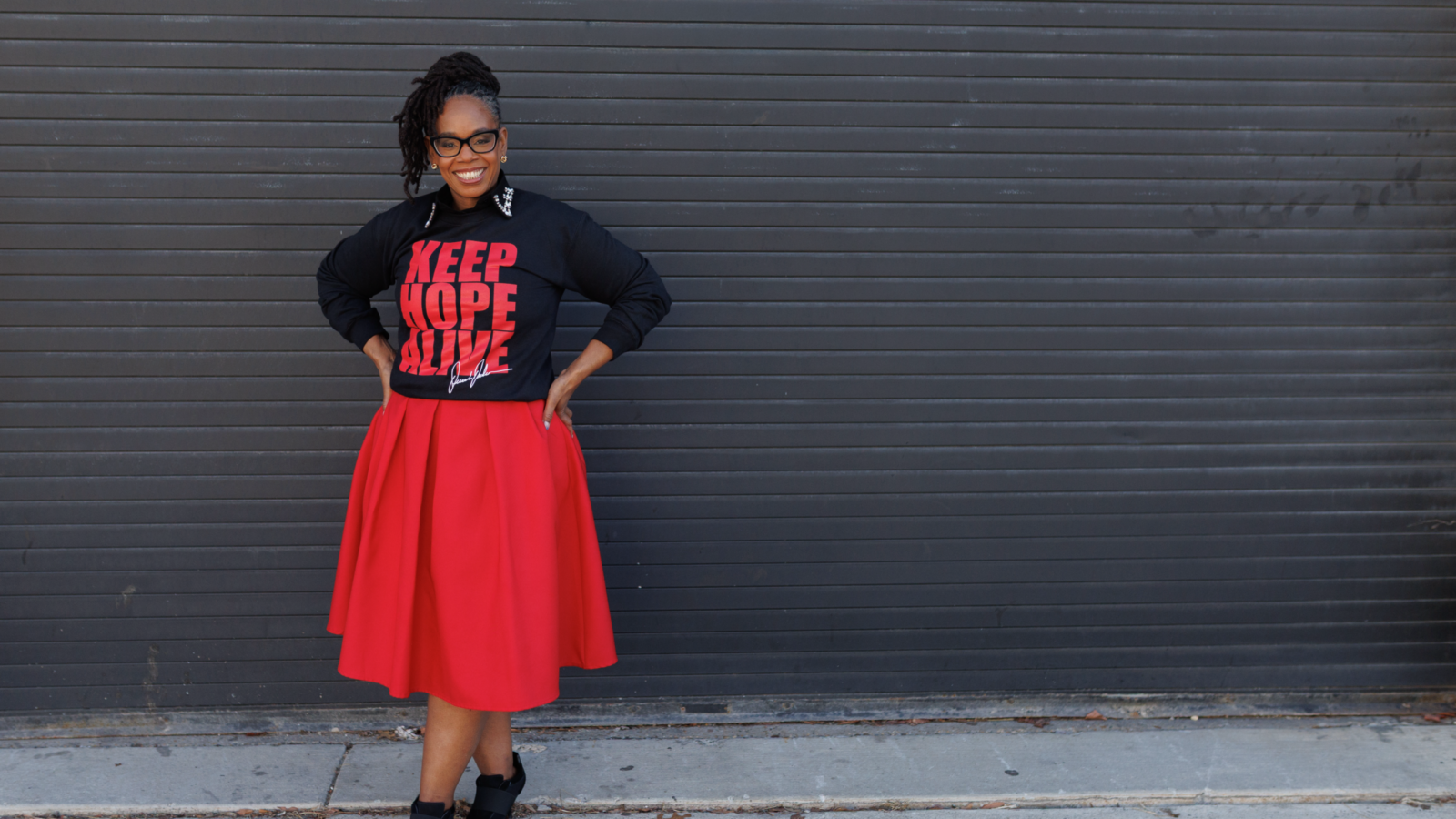
After historic gains for Black women in the 2026 midterm elections, Higher Heights CEO Glynda Carr reflects on what’s next.
In 2010, after Democrats suffered sweeping losses in the midterm elections despite Barack Obama making history as the nation’s first Black president just two years earlier, two Black women sat down at a Brooklyn coffee shop to air their frustrations with the political landscape, including the lack of spaces where Black women could wield their political power.
What they also did that day was plant the seeds for what would become Higher Heights, a political organization dedicated to helping Black women realize their full political potential, both at the voting booth and on the ballot.
“We wrote the words ‘higher heights’ down that day,” Carr recalled. “We wanted to be aspirational about what the possibilities could be, but we didn’t have the language for several years.”
On Tuesday, Nov. 3, 15 years after that fateful conversation, the foundation Carr and Peeler-Allen laid in that Brooklyn coffee shop came into full view as the 2026 midterm elections delivered a sweeping blue wave for Democrats and historic victories for Black women candidates across the country.
“This wave that people are talking about, this blue wave was led by Black women,” Carr continued, noting that now it’s “about moving from ‘first’ to normalizing Black women’s leadership.”
As president and CEO of Higher Heights, an organization dedicated to harnessing Black women’s political power through voter mobilization, advocacy, and supporting Black women seeking elected office, Carr has spent the last 15 years helping build the political infrastructure behind November’s historic election. That cycle saw 72 Black women secure major-party nominations for federal and statewide offices, Keisha Lance Bottoms become the first Black woman elected governor in the United States, and Juliana Stratton win her Senate race in Illinois, making her, Angela Alsobrooks of Maryland, and Lisa Blunt Rochester of Delaware the first three Black women to serve simultaneously in the U.S. Senate.
Carr spoke with theGrio about the years of organizing behind these victories, how Black women in power is becoming increasingly normalized, and what it will take to sustain this momentum.
The Q&A below has been edited and condensed for clarity.
theGrio: Looking at the 2026 midterm elections and just how historic it was for Black women across races, what would you say the biggest takeaway should be?
Carr: There were a lot of conversations about the commemoration of the 250th anniversary of this country’s birth, and that is very complex and nuanced for African Americans and Black women. We’re more concerned about the next 250 years and the role of Black women. So this election cycle was the first election cycle of the next 250 years.
Black women are going to be the founding mothers of the next democracy. We have already uniquely been leaders, [from] everyday women that lead in their communities that may not show up on anybody’s list to those who are elected leaders and leaders of organizations.
Black women want what our neighbors want. We want economically thriving, educated, healthy, and safe communities. We’re going to build something that will benefit generations beyond us. We have certainly been the architects of today’s democracy.
theGrio: We saw 72 Black women nominated for office across the country, and while not all of them obviously won, there were some major wins and some serious gains. What do these results say about the changing face of American politics and what might be possible in the future?
Carr: We know that if Black women have an equal playing field, or if they have the financial support and the infrastructure to support their runs for office, the army of volunteers to support this work, that they are uniquely already qualified to run for office and lead as elected leaders.
They also come with lived experiences that are unique and that will push better public policies because when you have a diverse decision-making table, they make better decisions. So it’s not just we’re electing Black women for Black women’s sake. It is a fact that we know that they’re bringing qualifications and lived experiences for a time as this.
We talk about the Chisholm effect. It’s been 58 years since Shirley Chisholm was elected to Congress, and in 2026, there are 31 Black women serving in Congress as part of her legacy.
theGrio: After Kamala Harris’ loss in 2024, there was a lot of discourse both somewhat serious and deeply unserious, perhaps, about Black women stepping back, putting their hands, and letting the country figure it out for itself. And now, two years later, Black women helped deliver some of the biggest victories of this election cycle. What do you make of that?
Carr: I would beg to say that it was an intentional rest. It was an intentional time for us to be introspective.
Coming out of that election cycle, you took that anger, the concern about the direction of this country, the inspiration of a Kamala Harris, all of the intersection of that. You see this record number of women running for office and then positioning themselves to catch the wave.
TheGrio: One question a lot of people have is: What made such a difference this time? Was there a meaningful shift in how Black women candidates were being supported, more money flowing into their campaigns, or did something change in how folks were organizing?
Carr: Well, it certainly wasn’t a cash increase. Black women were outspent, as we have historically been, but they weren’t being out-organized.
You connect local, statewide, regional, and national organizations that are Black-led. That has been a decade in the making, and that contributed to this work. This didn’t happen by happenstance. There are organizations on every single one of those levels that each played a role.
The political environment, watching young people organize and physically seeing their rights being rolled back, was a mobilizing moment. And then I would also add it was a cultural moment. We were living in a 24-hour news cycle, in a digital content-creator environment, and then you connect with candidates, and people were like, “Those are me, right?” People walk around [declaring], “My governor’s name is Keisha.”
theGrio: From inadequate funding to the need for sustained support once elected, Black women candidates continue to face significant challenges. What needs to change to address these issues and ensure their success extends past Election Day?
Carr: Democracy doesn’t begin and end on Election Day. Oftentimes, Black organizing gets a lot of money in those last 14 days to get out the vote. But our democracy and our government is a 365-day-a-year participatory activity.
The work ahead is creating the environment for those who just got elected to push bold policies, but also to hold the line on the bad policies that have been lurking around not only our community but this nation.
It’s what Shirley Chisholm would talk about. She believed her leadership to be unbought and unbossed. The way you can be unbought and unbossed is that the electorate, which turns into your constituencies, they’re helping to create the environment and the support for our leaders to be bold.
theGrio: Looking ahead, what will it take to protect these gains and make sure this isn’t just an isolated moment? As you mentioned, Washington, D.C., has now elected three Black women mayors, and that kind of leadership is becoming increasingly familiar in places across the country. How do we continue building on that momentum?
Carr: This is about making sure that we are supporting the Black women who are going to run for re-election.
People were caught off guard with the increases in our leadership. Our opponents are probably in a room somewhere organizing, saying, “Well, we’re going to take that person out.” And so we’ve got to hold the line, support them as they legislate or govern, and then prepare them for re-election.
This election cycle, bar none, has inspired women all over this country to say they’re going to run for office, from school board to Congress. They’re going to be looking for political homes. They’re going to be looking for training. They’re going to be looking for support as they make decisions about running for office.
Higher Heights is prepared to welcome them into the network and help them prepare for what may be a run for office.
theGrio: On a personal level, how does it feel to come out of these midterms knowing that the work you’ve spent almost 15 years building through Higher Heights has helped make so much of this possible, and what are you most excited about as you look toward the future?
Carr: We’re entering into our 15th year, and I know you’re on our list, so you’ll see some cool things we’re about to roll out.
I had an opportunity to go to Africa with 50 leaders that went on that trip with Vice President Kamala Harris when she went to the continent for the first time, and that was my the first time on the continent.
We went to Ghana with her, or I should say, we met her in Ghana, and had the opportunity to go to the largest slave castle, Cape Coast Castle. And so, standing on those shores, what struck me was that our people walked. We walked, and then we sat in those dungeons for months, and then we voyaged for months on these slave ships to the West Indies and the Americas.
If they were to have seen a rainbow on that shore, or they saw a rainbow on that boat, or when they got to the Americas or the Caribbean, and they saw a rainbow, for me they had to have dreamed to the other side of the rainbow. They certainly had to believe in the possibilities of what could have been on the other side of the circumstances that they were in.
That’s where I think we’re at the dawn of that. There are Black women sitting at the foot of this new rainbow, imagining what the possibilities are for the next generations.
More About:Lifestyle
Weekly New Episodes
Stream Now