

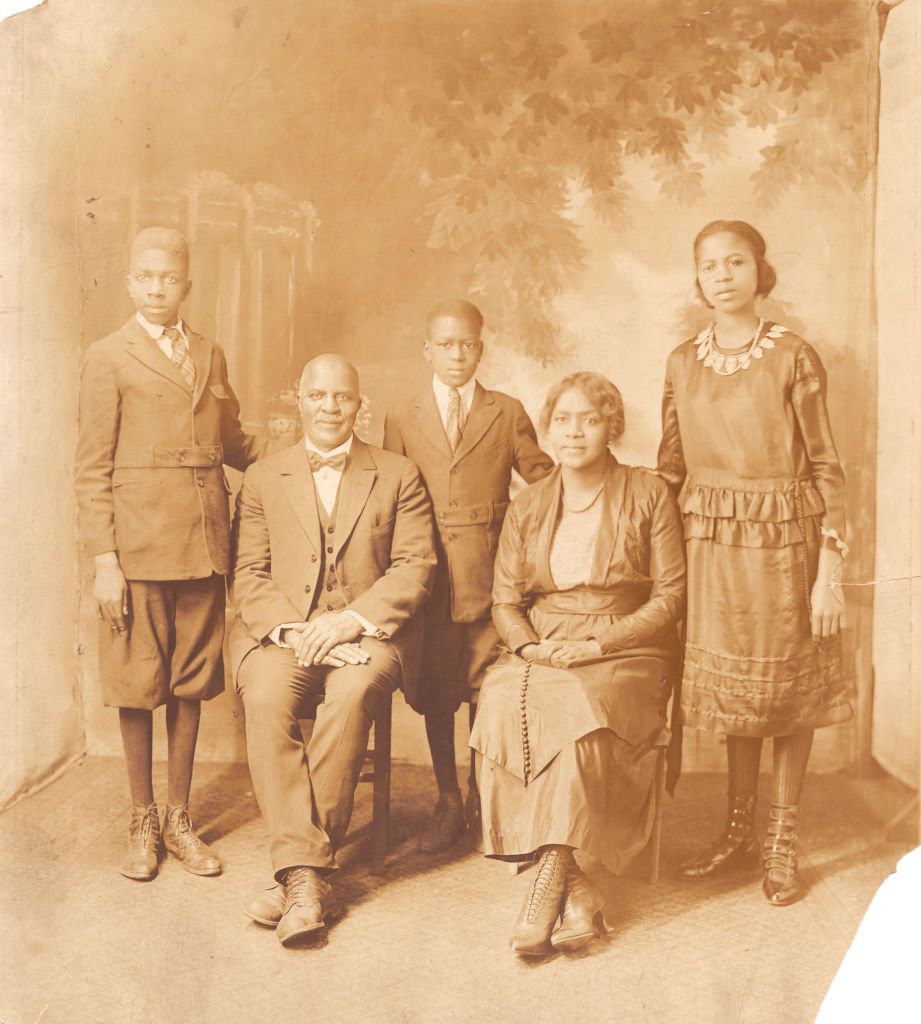
Between 1910 and 1970, roughly 6 million Black Americans left the rural South for industrial cities in the North, Midwest, and West, fundamentally reshaping the nation.
From the Jim Crow South to the streets of Harlem, Chicago and Detroit, the Great Migration reshaped Black America, transformed American culture and helped lay the foundation for generations of artistic, political and social movements. The story of Black America is, in many ways, a story of movement. A journey defined by courage, sacrifice and the pursuit of freedom.
Between 1910 and 1970, approximately six million Black Americans left the South in what became known as the Great Migration, one of the largest internal population movements in American history, according to Harvard.
They boarded trains, packed their belongings and headed toward cities promising better jobs, educational opportunities, higher wages and an escape from the racial violence that defined much of Southern life.
But the Great Migration was about more than finding a new place to live. It was about building new communities, creating opportunities for future generations and changing the cultural identity of an entire nation.
From the Harlem Renaissance to Chicago blues, Motown and the Civil Rights Movement, its influence continues to be felt today.
The Great Migration refers to the movement of approximately six million African Americans from the rural South to urban communities in the North, Midwest and West between 1910 and 1970.
Historians generally divide it into two periods. The First Great Migration, spanning 1910 to 1940, saw Black Southerners move primarily to Northern and Midwestern industrial cities seeking employment and greater freedom. The Second Great Migration, between 1940 and 1970, brought another wave of movement, fueled largely by World War II and the expansion of the defense industry, with significant numbers settling in Western cities, like Los Angeles, per PBS SoCal.
While economic opportunity was a major attraction, the decision to leave was also driven by generations of racial discrimination, segregation and violence.
Following emancipation, Black Americans began exercising freedoms that had long been denied to them. During Reconstruction (1865–1877), newly enfranchised Black men voted, held public office, established schools and built businesses.
Approximately 2,000 Black Americans held public office during Reconstruction, including two U.S. senators, Hiram Revels and Blanche K. Bruce, and 16 members of the House of Representatives.
Their growing political and economic independence sparked a violent backlash from white supremacists.
As federal protection diminished following Reconstruction, racial intimidation, lynching, voter suppression and attacks on Black businesses and landowners intensified. Jim Crow laws further restricted access to education, employment, housing and political participation.
For many Black families, leaving the South became a way to pursue the freedom that emancipation had promised, but segregation continued to deny.
The Great Migration was both an economic decision and an act of resistance.
For many families, the journey north followed railroad routes and the recommendations of relatives and friends who had already relocated. Established Black communities helped newcomers find housing, employment and support.
In the Northeast, New York City became one of the most important destinations, particularly Harlem, which emerged as a center of Black intellectual, artistic and political life. Philadelphia attracted migrants seeking industrial employment and opportunities to establish businesses and families. Boston, particularly the Roxbury neighborhood, became an important center of Black community life, while Newark attracted thousands seeking manufacturing jobs and new opportunities.
In the Midwest, Chicago became one of the biggest destinations of the Great Migration. Migrants from Mississippi, Alabama and Tennessee helped build a thriving Black community, particularly on the South Side, where businesses, churches, newspapers and cultural institutions flourished. In fact, gospel music was born within the city during that period as migrants brought their own emotional, rhythm-driven, participatory worship styles and spirituals of the rural South with them to Chicago.
Detroit also attracted enormous numbers of Black workers through its growing automobile and manufacturing industries, especially during World War II.
The Second Great Migration expanded the movement westward. Black Americans relocated to Los Angeles, Oakland, San Francisco, Portland and Seattle, where expanding defense industries, shipyards and aircraft factories created new employment opportunities.
These destinations became important centers of Black cultural, economic and political life.
World War I and World War II created significant labor shortages, opening doors to industrial employment that had previously been difficult for Black Southerners to access.
Many migrants moved from agricultural labor and domestic service into factory and manufacturing jobs, earning higher wages and gaining opportunities to establish greater financial independence.
The 1940s brought particularly important economic gains for Black workers. Increased industrial employment, migration and educational opportunities contributed to improvements in earnings and helped narrow the racial wage gap.
Education was another major motivation. Parents wanted their children to attend better-funded schools and have access to careers that segregation had restricted in the South.
As one historian explained in Henry Louis Gates, Jr.’s 2025 documentary GREAT MIGRATIONS: A PEOPLE ON THE MOVE:
“I think migration is freedom to Black America. That decision to migrate was everything. It broadened Black life and what that life could look like. To create a whole new life in these new places is what made the next generation possible.”
The North and West were not free from racism or discrimination, but for millions of families, migration represented the possibility of a different future.
“Movement is a really concrete way of measuring your freedom,” she added. “Realizing that I can make a choice to pick up and start up all over again elsewhere — if that’s not the most transformative decision that you can make, I don’t know what is.”
One of the Great Migration’s most lasting contributions was its influence on American culture.
Black Southerners carried their music, traditions, religious practices, storytelling and artistic expression into their new communities. These traditions blended with urban experiences to create movements that would influence generations.
The Harlem Renaissance of the 1920s and 1930s was one of the most influential cultural movements in Black American history.
Centered in Harlem, New York, it celebrated Black literature, music, theater, intellectual thought and visual art.
Writers and artists including Langston Hughes, Zora Neale Hurston and Jacob Lawrence helped redefine how Black life and identity were represented in American culture.
The movement challenged racial stereotypes and encouraged a new sense of Black pride, creativity and self-expression.
Chicago developed its own influential cultural movement, particularly on the South Side, during the 1930s through the 1950s.
The Chicago Black Renaissance brought together writers, poets, journalists and visual artists who explored Black identity and urban life.
Notable figures included Richard Wright, author of Native Son, and Gwendolyn Brooks, whose poetry captured the experiences of Black communities, and Thomas Andrew Dorsey, the Godfather of Gospel.
During the 1930s, Dorsey helped popularize a style of African American religious music that combined the emotional intensity and musical language of the blues with Christian lyrics and themes. His approach was not immediately embraced by everyone in the church world, but it helped establish the sound and structure of modern gospel. His work became closely associated with Pilgrim Baptist Church in Chicago, where he led the choir for decades and helped develop a musical legacy that attracted generations of gospel singers.
It demonstrated that Black artistic innovation extended far beyond Harlem. The Great Migration transformed American music as Southern musicians brought Delta blues, gospel and jazz traditions to cities such as Chicago, Kansas City and New York.
In addition to gospel, Chicago also became a major center for electric blues, with musicians like Muddy Waters and Howlin’ Wolf influencing the sound of modern music. Jazz artists such as Duke Ellington and Louis Armstrong helped bring the genre to national and international audiences. These musical traditions would go on to influence rhythm and blues, rock and roll and countless other genres.
Detroit’s growing Black population also helped create the cultural environment that would give rise to Motown Records, founded by Berry Gordy Jr. in 1959. Blending gospel, rhythm and blues and pop influences, Motown introduced the world to artists including The Supremes, Stevie Wonder, Marvin Gaye, The Temptations and The Four Tops.
The label became an international cultural force and demonstrated the growing influence of Black-owned businesses and creative enterprises.
The Great Migration also transformed American politics.
As Black Americans settled in Northern and Western cities, their growing populations increased their political influence and created stronger networks of community organizing.
Churches, newspapers, civic organizations and groups such as the NAACP and National Urban League became important platforms for advocating racial equality.
Black communities organized against housing discrimination, employment inequality, segregation and police brutality.
Although the Civil Rights Movement had roots stretching back generations, the Great Migration helped strengthen the institutions, leadership and political networks that supported the fight for equality during the 1950s and 1960s.
It helped expand the struggle for Black freedom into a national movement.
The Legacy of the Great Migration
By 1970, approximately six million Black Americans had left the South during the Great Migration.
Their journeys changed the demographic makeup of American cities, strengthened Black communities and reshaped the nation’s cultural identity. The journey was not without hardship. Migrants encountered housing discrimination, racial hostility and economic barriers in the very cities they hoped would offer greater freedom.
Still, millions made the journey.
They were factory workers, sharecroppers, musicians, teachers, entrepreneurs and parents determined to create better opportunities for their children.
The Great Migration was about more than leaving the South. It was about claiming the right to imagine a different future. And in doing so, six million Black Americans helped change the course of American history.
SEE MORE:
What Is The History Of Soul Food? How Black People Shaped Southern Cuisine
5 Race Riots In America That You Were Never Taught In School
The Great Migration: How 6 Million Black Americans Changed America Forever was originally published on newsone.com
2026 Election Day & National Sandwich Day Freebies and Deals
COMMENTARY: 5 Reasons Why Obama Will Beat Romney
Friday The 13th Food Deals & Freebies You Can't Miss
Three Shot In Wal-Mart In Philly Suburb Over Checkout Dispute 
We care about your data. See our privacy policy.
An Urban One Brand
Copyright © 2026 Interactive One, LLC. All Rights Reserved.