

[ad_1]
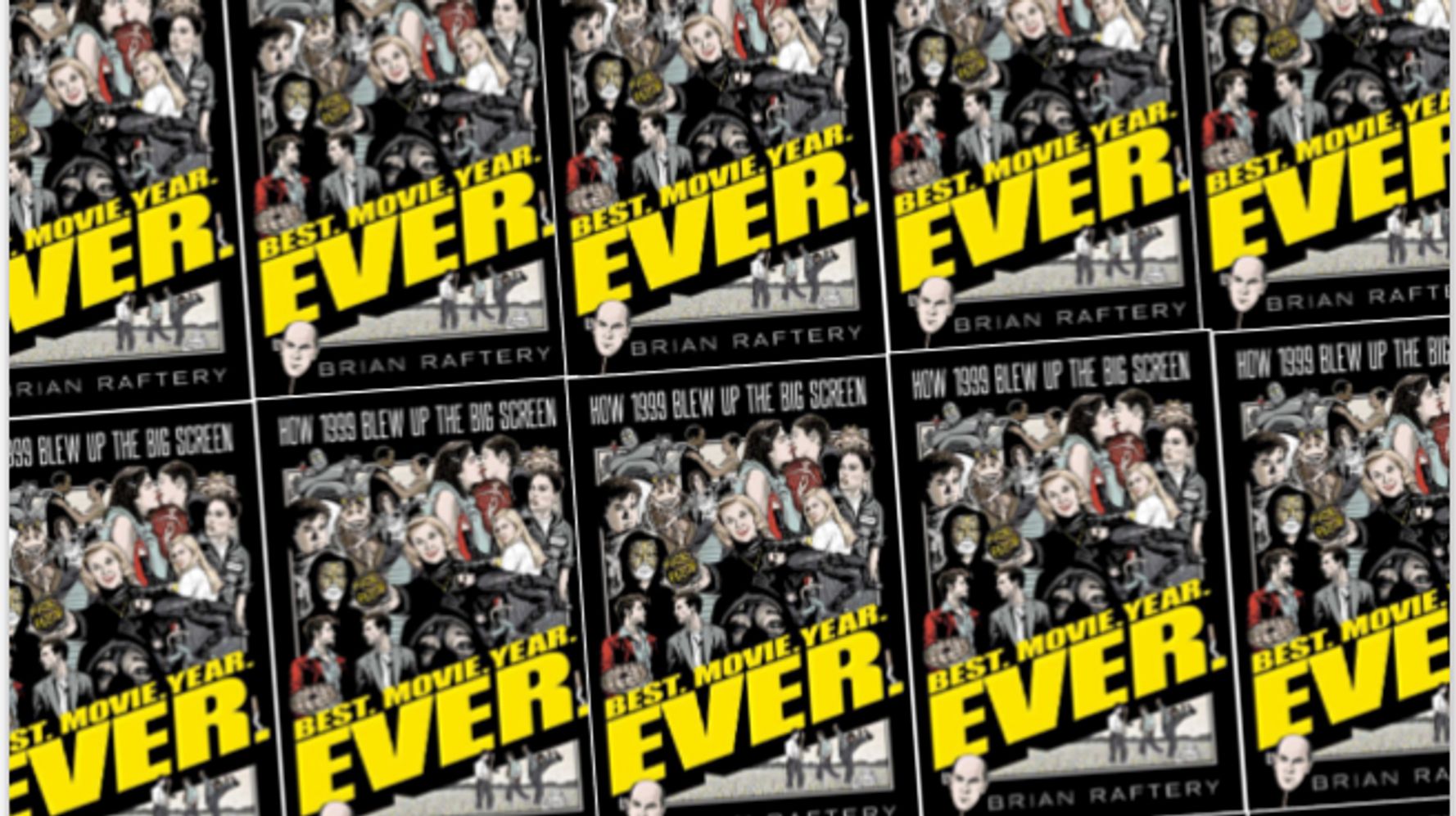
Brian Raftery isn’t one for nostalgia. That might sound strange, considering he recently published a book celebrating the movies of 1999, but he swears it’s the case.
“I am so loath to nostalgize the ’90s, as someone from Gen X,” he said over the phone. “Because I think that nostalgia can be a very ruinous, poisonous, delusional drug to take after a while.”
Even so, he couldn’t help but look back for “Best. Movie. Year. Ever.: How 1999 Blew Up the Big Screen.” Released back in April, Raftery’s book surveys the film landscape circa Y2K and lovingly details what made it such a special time for moviegoers.
“Everything that had happened in the previous six to seven decades in cinema kind of all merged, and at the same time, the next several decades of cinema started to rear its head,” he told HuffPost. “I don’t think you’ll ever get another year where you have so many filmmakers of various generations and influences making so many good films for an audience quite so big.”
I don’t think you’ll ever get another year where you have so many filmmakers of various generations and influences making so many good films for an audience quite so big.
Brian Raftery
A quick rundown of just some of the titles that hit theaters that year: “Fight Club,” “The Matrix,” “Magnolia,” “The Blair Witch Project,” “Election,” “10 Things I Hate About You,” “Being John Malkovich,” “Eyes Wide Shut,” “Office Space,” “The Sixth Sense,” “The Insider.” Even a few of the less-than-stellar features (hello, ”American Beauty” and “Star Wars: Episode I – The Phantom Menace”) are significant. It’s a staggering list, hence the cheeky designation of “Best. Movie. Year. Ever.”
“The title is kind of a dare,” Raftery admitted. “What I’m hoping is that people will argue about that and will look at ’39 or ’50 or ’94 and very vehemently and angrily defend those years to me because those are all great years. Nothing makes me happier than people talking about movies.”
Because he’s an expert, and because it was such a stacked year, HuffPost asked Raftery to pick his top five favorite movies from 1999.
This interview has been edited and condensed for clarity.
1. “Election” (Directed by Alexander Payne)
While I was writing the book for, like, two years, I had a top five in my head, and it changed almost every day. It’s very hard to make a top 10 for that year, much less a five. But even when I was changing around my top five, there were three movies that were always on there. The first of which — and this probably is my favorite movies from that year, I’ve watched it so many times — is “Election.”
I’d put that at number one for a couple of reasons. I definitely saw it in ’99, but I don’t think I quite appreciated how insightful and dark and relatable it was until the years afterward. I don’t know what you would change from that movie, at all. Every performance is very spot-on. Reese Witherspoon doing that sort of assertive but very smart and take-control character, she’s so good at it — you don’t for a second not believe that Tracy Flick is going to run the world in some way, which is so crucial to that movie working.
It’s kind of a flawless movie. I hate to say that, because it sounds like a hack way to describe it. The kind of humor it has — which is obviously social satire but very much day-in-high-school comedy — is very funny to me. It just feels like a movie that could’ve been made at any point in the last 20 years and it would feel timely.
I think that’s why I keep rewatching it and I never get tired of it. I always find something new. It says so much about gender and class and the way we treat one another and the way we view one another, and it articulates a lot of different levels of rage, which is just very rare in a movie. And the student rally scene, the pep rally scene, is hilarious, and you know who all those characters are the moment that scene happens. Tracy Flick’s speech is amazing, and Chris Klein’s speech is amazing, and they all feel like you’re looking at the next 20 years of politics when you watch those speeches.
That’s the best use of Chris Klein in any movie.
Absolutely. And he’s such a unique character in that, I think most other directors and writers would make that guy either a dumb jock or a cruel jock, and he’s just kind of a sweet guy who’s always gonna be slightly in over his head in life, but he’s not gonna be aware of it, and he plays that so beautifully. You can’t really root against anyone in “Election,” and you can’t really root entirely for them. And I love that about the movie.
There are a few movie characters from that year that have very good name recognition with people. If you say “Tyler Durden” or “Mace Windu,” people know who you’re talking about. Tracy Flick is definitely one of those characters — she’s an archetype, which is impressive.
Totally. I think Tracy Flick and Tyler Durden are kind of, for better or worse, the king and queen of the 1999 prom. Those characters are really indelible and they feel like they’re everywhere now.
2. “Being John Malkovich” (Directed by Spike Jonze)
First of all, it’s the first Spike Jonze movie, and I love his films, I love him as a filmmaker. The fact that he and Charlie Kaufman got to make this movie still feels like they got away with something. And I think, even in the theater when I saw it, no one could understand that movie when it arrived. People who loved it were like, “I saw this movie. I don’t know what it is, I don’t know how it got made, I don’t know what it’s doing here.” That style of comedy — which is, in some ways, very savage but very kind — is so hard to pull off.
“Being John Malkovich” just having that surreal idea of going into someone’s head and laying it out so beautifully, but also treating it matter-of-factly, made it so compelling. The weird thing about “Being John Malkovich” is, like a lot of people, I didn’t walk out thinking, “Well, wait, how did they get in his head? They’ve gotta explain that more.” The thing about “Being John Malkovich” is, you kind of buy it from the first five minutes. You go, “OK.”
That movie, in particular, felt like it was hitting on a lot of ideas that, in the late ’90s, we hadn’t quite articulated or hadn’t quite realized were problems yet. I think the idea of hijacking someone’s identity — which is being done on a minute-by-minute basis on the internet at this point — back then still felt kind of novel and weird. And I think people forget that Cameron Diaz’s character [Lotte] has all these gender identity dilemmas and questions. It was very much saying to the audience, “Haven’t you ever thought about wanting to be someone else?” And then it took that question further and it’s like, “Are you comfortable in your own body, even? Do you know who you’re supposed to be?” Those are such radical ideas to have in a movie that’s about a puppeteer who’s depressed.
I rewatched it recently and I didn’t know if the Cameron Diaz arc played well now, actually. I still thought the movie was great, but that was the only part that made me go, “Hmm.” I just wasn’t sure if the movie was playing her questions about gender identity for laughs.
I always felt like that movie was so, ultimately, sympathetic toward Lotte; to my mind, she’s the only redeeming character in the film, in a way. I don’t know, it’s an interesting question. And it’s written by two cis, white guys — who knows what their perspective was on those things, and maybe they were reaching for a laugh a little bit.
But I feel like the part in the car, where she’s really explaining it, gives that whole character and that moment and that idea a kindness to it. And the rest of the movie forward, you are very much on her side. I know that because I grew up with some of these movies, that I view them through a different lens than other people will, watching them now. And I wonder if that would hurt the movie, or whether people would be able to see it as a movie that was trying to discuss this at a time when a lot of films weren’t.
3. “Three Kings” (Directed by David O. Russell)
I felt the way about “Three Kings” that other people that year felt about “The Matrix.” And I don’t mean in terms of the same ideas that it was trying to illustrate, but I felt so energized by that movie. It was a movie I just did not know that I had needed. It felt much smarter than a movie just saying, “War is bad.” It felt like it was really trying to get at the roots of some distinctly American problems that I had seen as a young man and at specifically a generation that was very big on violence and violence in the culture.
This was a movie that was pointing all these questions back at the audience about what we were doing out there, what America’s history of violence is, what our own sort of love of violence is, but also it’s a cracker-jack action movie. It’s so much fun, it’s so exciting at times. The scene where Mark Wahlberg, his van or his truck is just careening across the sand, and it almost blows up, that kind of felt like it was capturing the spirit of the time — that we were also on the brink of something.
I don’t want to say this movie’s been forgotten. But why do you think “Three Kings” has taken a back seat to some of the other films from that year?
I don’t know why. I can guess: It was a moderate hit, but it wasn’t an awards movie, which I think would have kept it in the culture a little bit longer. I think there are probably a lot of people who haven’t seen it because either they think it’s too much of an action movie, they don’t like action movies, or they think it’s too much of a message movie, which it’s not.
It was a very hard movie to sell, even back then. I don’t think it’s a downer of a movie, but that movie was looking at a war that happened 10 years ago, basically, and saying, “This isn’t over.” And we now know, 20 years later, it wasn’t over.
It’s very hard to make a movie about the Middle East conflict, any era of it, any region involved, and get people to get excited for it. It’s the most complicated geopolitical situation of my lifetime, and it’s very hard to make a movie about it. But it does have its loyalists, and I do think even if David O. Russell made 10 more movies, “Three Kings” would probably always be one of his top three films. There’s a lot of good movies that year, too. It’s hard to make those top five, top 10 lists for that year and not leave some crucial movies out.
4. “Boys Don’t Cry” (Directed by Kimberly Peirce)
I know for some people, this might be a controversial choice — I think “Boys Don’t Cry” is an extraordinary movie. I was absolutely saddened by it when I saw it. Frankly, I was really down for days, just because Matthew Shepard had been on the cover of Time the year before, the ’90s had had this really cruel homophobic streak in the culture in some ways, and in the real world. So that’s obviously one reason why “Boys Don’t Cry” resonated for me and still does.
When I interviewed the cinematographer, he was telling me, I hadn’t realized this, but Jim Denault was saying that they really tried to stay away from natural light. And when I rewatched it after that, I was like, “Oh yeah, this all looks like it’s just the moon is out and there’s nothing around them.” All of the light is either these big, kind of Kwik-E-Mart, giant blasts of artificial light or it’s this moonlight. And I just think that movie is very haunting.
That’s a movie that would not be made the same way today. I think there would absolutely be a call — a completely justified and, I think, necessary call — for that to be a trans performer in that lead [role], and I think it would get made that way. It didn’t get made that way back in the late ’90s for reasons that the casting director and the director both talked about with me, and they just couldn’t find the right person.
And I know that there is a little bit of a stigma toward it because it’s Hilary Swank, but I think that movie is deeply moving. It’s a remarkable movie about teenagers. I know they’re not strictly teenagers in that movie, but it’s about young people and the bonds they form when they feel like they’re on the outskirts of something, which is a really crucial component of that film that doesn’t get talked about enough — the way all those kids find each other and make this very uneasy social truce for a while that gets ultimately betrayed in this heartbreaking, terrifying way.
And I think the love story is very deeply, deeply moving. And I do think, at the time, it was an important film for people like me, who were not aware of these kind of troubles in any sort of intimate way; that movie and Matthew Shepard within a year of each other, those were crucial wake-up moments for a lot of oblivious, cis, straight guys like me.
Am I wrong to think that “Boys Don’t Cry” has a reputation for being awards bait? That it was an Oscars play?
I don’t know if it does or not. I’m sure it does; it was Fox Searchlight, and Fox Searchlight’s always this Oscar-bait-y studio, but it certainly wasn’t made in that spirit. I think the fact that Kimberly Peirce was coming from a background of independent film and what we called then the “New Queer Cinema” movement, and the fact that she did this on the tiniest of tiny budgets — if the media narrative that emerged afterward made it an Oscar-bait movie, sure, fair enough.
At the time, though, it certainly did not feel like that was the intent. And maybe that is part of the movie’s legacy. I think there are people who also find it problematic that it’s a movie with Hilary Swank playing a trans, real-life person [Brandon Teena] and is brutalized in the film. I think some people find that distasteful, and, again, I absolutely understand the idea that some people see this as a movie that turns a trans figure into a victim. The problems people have with this movie, I absolutely see and understand it. I just say, when I look at it as both a film, a series of performances, and what that movie meant culturally in 1999, it feels very important to me.
Maybe it’s just my context for the movie. Because I would’ve first learned about it while watching the Oscars.
I’m not saying you’re wrong. Look, the fact that Hilary Swank got an award for it during a period where a lot of actors were using indie movies to kind of get Oscars, I understand if there is some skepticism and cynicism about that. But I think what Kimberly Peirce was doing — and she had Andy Bienen, who was co-writing and Jim Denault, who shot it — I don’t think it was made with anything but a serious sense of love and obsession for that story, and I think that comes out. And a love for Brandon.
5. “Fight Club” (Directed by David Fincher)
I have a lot of qualifiers about “Fight Club.” When I saw “Fight Club,” I did not relate to it in one key way, which is that I was not raised by an angry man; I did not feel like I needed a war in my generation. All of the Tyler Durden stuff about masculinity in that movie did not connect with me at all. I understand when you say, “I like ‘Fight Club,’” it’s like, “Oh boy. We should probably not have this person babysit our kids.” However, there’s three things about that film that I love — three very specific things.
One: It is the absolute best performance of Brad Pitt’s career, and maybe Ed Norton’s, too. And the fact that Brad Pitt, who was, at that point, absolutely a demigod and one of the biggest movie stars in the world — he still is — but the fact that they managed to make his celebrity and his charisma and his sex appeal such an interesting and integral part of that character is such a delightful use of a famous person and a famous actor. It’s the most perfectly cast movie in a year full of perfectly cast movies.
And Edward Norton is just so punchable and drowsy-looking and manic, and he is spot-on as well. And, obviously, Helena Bonham-Carter is just so vicious and savage and this incredibly foxy, miserable, terrible, wonderful person. I think she’s so good in it, and she’s never had a role quite as vicious as that again.
Number two: I love the way Fincher shot it, the way he edited it, the way the scenes fall into one another. Jim Uhls, who’s really important to credit, he did a remarkably great job adapting it. If you read the book, it does not read like a movie at all, and he really stripped out the stuff that wouldn’t work in the movie.
But also, the third thing is: It’s an anti-corporation movie, made by a huge corporation, made by a corporately funded filmmaker, and that part of the movie resonated with me in 1999 and still resonates with me now. The idea of branding and merchandise and what you own being the things that own you, all that stuff — even if it is kind of like dorm-room-sticker wisdom — I really related to that. It’s important to have a movie that big and that glossy and that star-packed also be that provocative and kind of angry.
So, I love “Fight Club”; I never thought Tyler Durden was cool, but I thought the idea of making fun of Calvin Klein ads and of Starbucks was very cool. And I thought the idea of making fun of corporate art is hilarious and necessary, especially when it comes from a giant piece of corporate art itself, you know?
I get the appeal of Pitt’s character in the first half of the film, but I don’t know how you could walk away from that movie and not think he’s the villain; the movie is pretty explicit about that. I feel like it’s gotten a bad rap because of the fans.
Yeah, I think “The Matrix” has a little bit of that, too, where it’s just sort of like, “What’s the message you’re taking away from it?” I do think [“Fight Club”’s] fate kind of kept in line with the movie’s ideas, where it’s like, you just can’t control these things. You can’t control the directions of these kinds of movements, and “Fight Club” kind of became its own movement.
But stuff like the airplane sequence, the whole montage where he’s flying from one place to another, the rooftop shot at the end — it’s extraordinary, high-end, high-craftsmanship filmmaking. And I think, sometimes, I allow that to let me overlook some of the more dangerous ideas in that film that maybe should’ve been smoothed out. Or maybe they should’ve made Tyler Durden more of a clear-cut villain.
I mean, the idea of getting rid of your credit card company, who doesn’t relate to that now? The question is, though, would someone really try to blow up a credit card company? Back then, that seemed like a relatively far-fetched idea.
You mentioned that maybe some stuff should’ve been smoothed out a bit. This is obviously a very loaded question, but do you think that that movie bears a lot of responsibility for the way it’s been interpreted?
It’s tough because I think the people who wanted to see “Fight Club” as an inspiration were going to see it as an inspiration no matter what. I think the problem with that movie is the problem with the culture, which is that there are a lot of very angry men who feel entitled and feel angry to a degree that they need to take some sort of action.
I think very seriously and very deeply about what art should feel responsible for. Because there’s part of me that feels like artists should never have to apologize or worry about this; there’s also a part of me that winces when I see five posters with guns or five trailers with gunplay back to back.
You could argue that Tyler Durden should’ve been a more clear-cut villain and that maybe that ending should’ve felt a little less triumphant in some ways — but it also feels honest to what the mood of that time and that character was, I guess. But I don’t think “Fight Club” invented Anonymous, I don’t think “Fight Club” invented Gamergate. I think it maybe gave some of the people in those various movements — or whatever you want to call them — a shorthand and a meme and maybe a spirit animal, but I don’t think it was intended as that.
That’s a thorny question. I think the reason these movies are my five favorite is because they have inspired the most arguments, the most conversation, the most backtracking and backpedaling and then doubling down, among any other movies of that year. And I like movies like that. If you could talk to five different people at a party about “Being John Malkovich,” you’re going to get five very different perspectives on what it means and whether it works or not. I think that’s what makes those five films very exciting.
REAL LIFE. REAL NEWS. REAL VOICES.
Help us tell more of the stories that matter from voices that too often remain unheard.
[ad_2]
Source link